Apartments & places to stay in Bihać
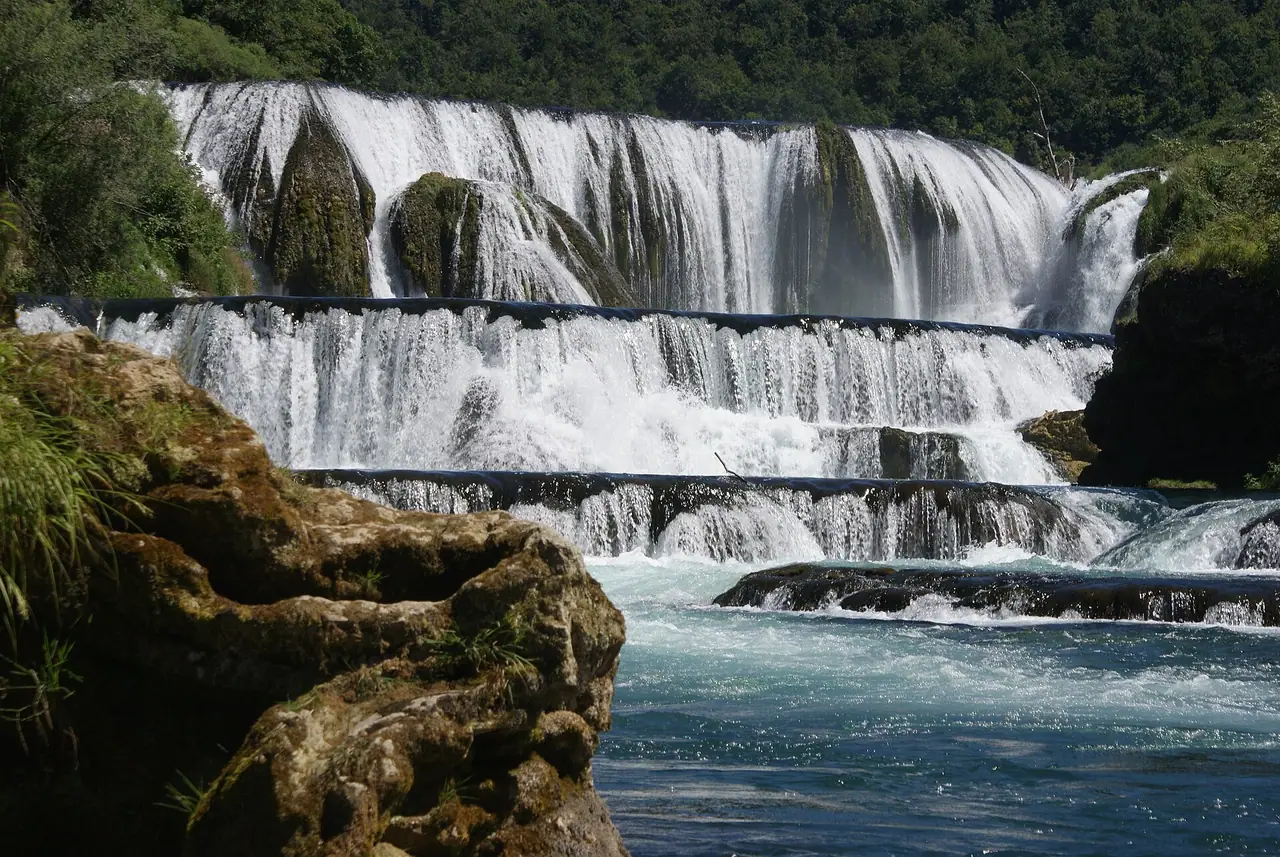
The gateway to Una National Park: a clear green river with travertine falls, rafting and quiet riverside meadows in the far north-west.
- From Sarajevo
- 312 km
- Štrbački Buk
- 24.5 m
- Altitude
- 230 m
- Stays nearby
- 6

BihaćBosanska Krajina
Photo: Miha Peče, CC BY-SA 4.0
Where to stay
Stays in Bihać
6 stays within 30 km, the closest first.
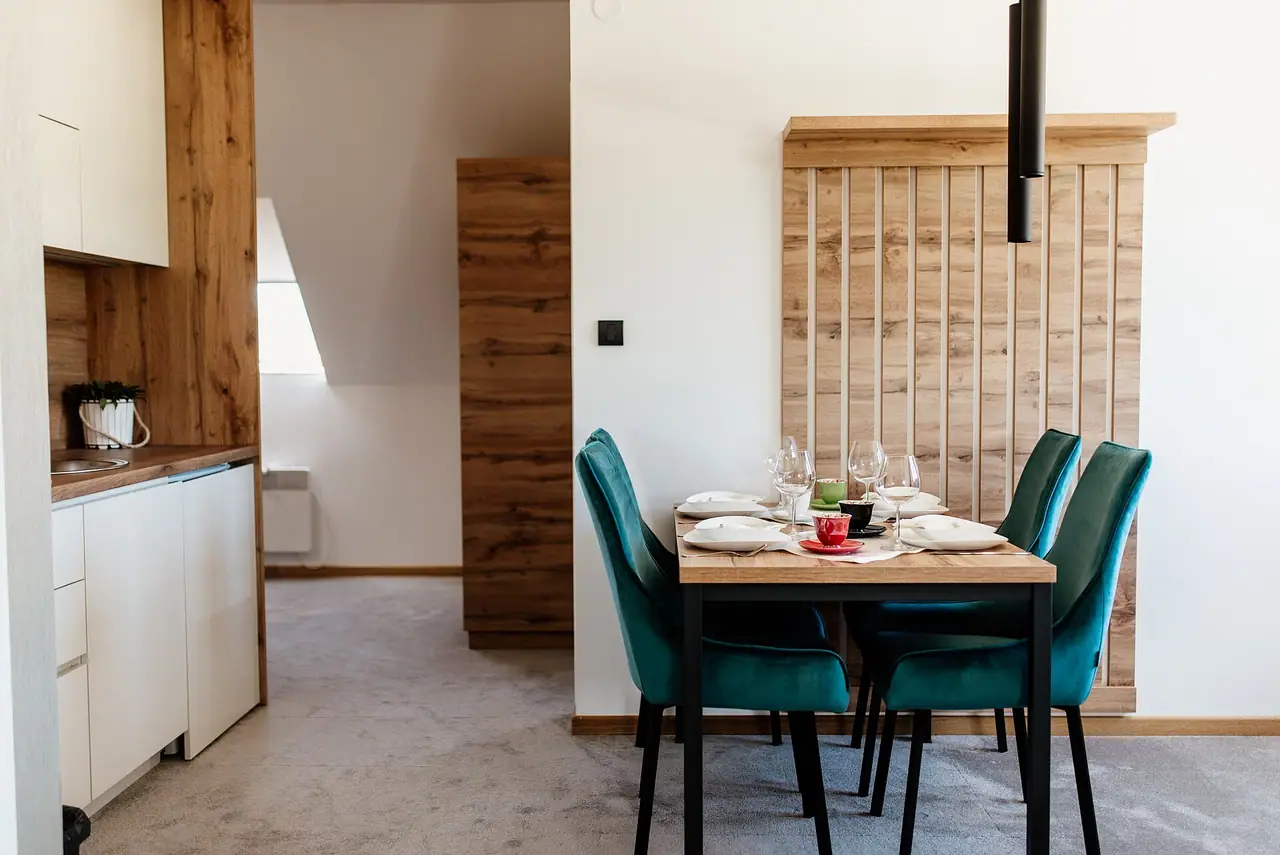


Studio Kapija in Town centre
€55a nightFree cancellationPay on arrival
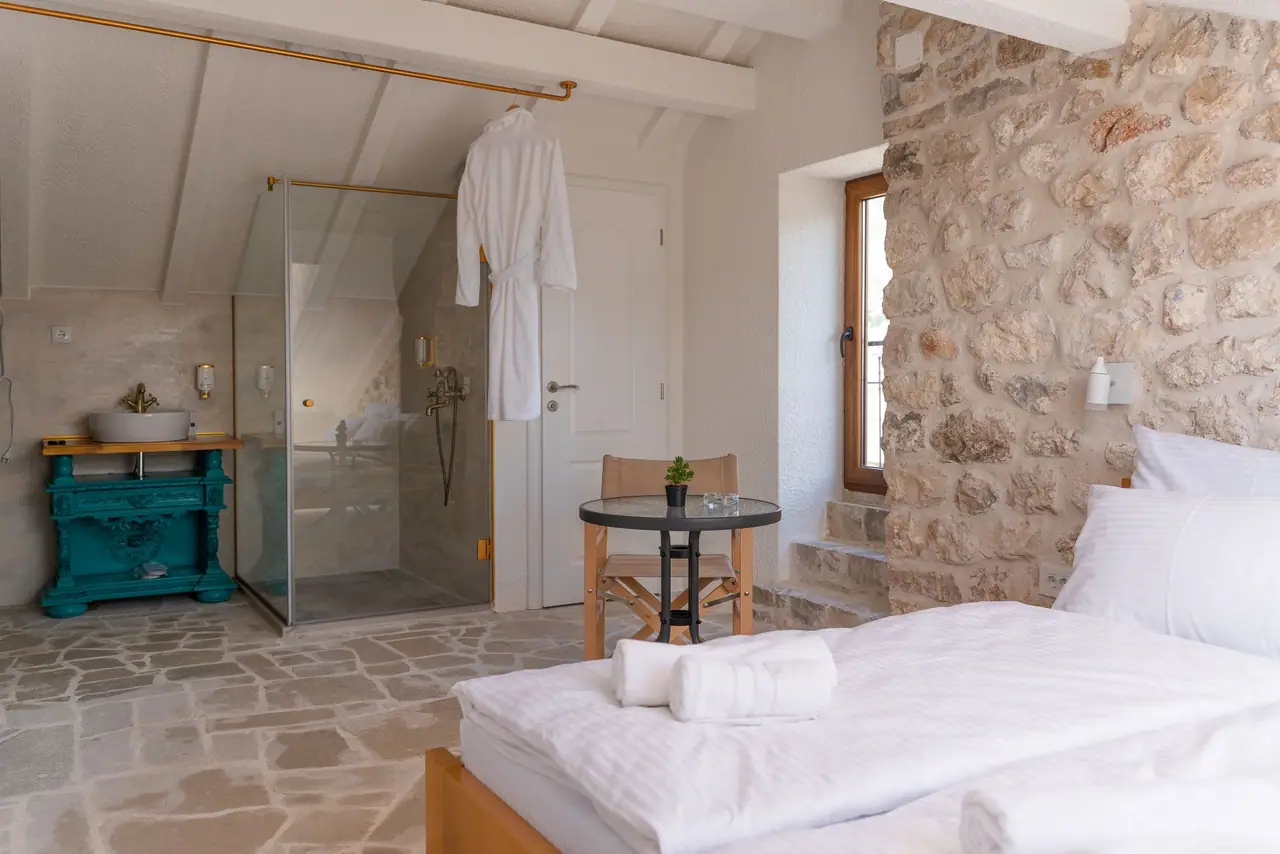

House Bašta along the Una
€101a nightFree cancellation



Guide
Bihać: a guide to your stay
Where to stay in Bihać, what to see, how to get there and when to go: a town on the Una and the gateway to Una National Park, with Štrbački Buk waterfall and rafting.
Why Bihać
Bihać is a town on the river Una, in the far north-west of Bosnia and Herzegovina, close to the border with Croatia. It is the seat of Una-Sana Canton in the Federation of Bosnia and Herzegovina and lies 230 metres above sea level. Through the town, the Una runs clear and green, with islands and small waterfalls.
The town has a long history. It is first mentioned in 1260, in a charter of the Hungarian king Béla IV, and in 1262 it was granted the rights of a free royal town. The Ottomans took it in 1592, after a ten-day siege. Today Bihać is also the gateway to Una National Park, founded in 2008, with Štrbački Buk waterfall, the falls at Martin Brod and rafting on the Una.
Where to stay in Bihać
Apartments in Bihać are a good choice for a weekend on the Una, a rafting trip or a visit to the national park. In Bihać, everything on Najmio is let by local hosts: apartments for couples and families, flats by the night in town, houses and holiday homes with a garden, and rooms in a family home. There are no hotel rooms and no middlemen. You deal directly with the host, and you pay when you arrive.
- The centre. From an apartment in the centre you can walk to the Captain’s Tower, the Fethija and the banks of the Una. You won’t need a car to see the town.
- Along the Una. Apartments by the river are quieter, with views of the water and the greenery.
- The villages towards the park and the mountains. Houses and holiday homes in the villages around town and towards Una National Park, with a garden and a barbecue. You will need a car, but you are closer to the waterfalls and the rafting.
The host sets the price, and you see all of it, cleaning included, before you book. In summer, during the rafting season and the Una Regatta, the best places fill up fast, so book ahead.
Things to see and do in Bihać
The Una in town
The Una rises in Croatia and flows about 70 km to Bihać. In town it splits around islands and spills over small waterfalls, and its clear green-turquoise colour gives Bihać its distinctive look. In summer, jumping into the river from the town’s bridges is popular. The Una is also known for its grayling and brown trout. In the national park, fishing is allowed only on certain stretches, under the park’s rules.
The Captain’s Tower
The Captain’s Tower (Kapetanova kula) is a tall, square stone tower in the old centre and one of the oldest buildings in town. It is usually dated to the 13th century and takes its name from the town captain who lived on the top floor. The tower still bears the figure of a pelican, the coat of arms of the Frankopans, who ruled Bihać from 1412 to the early 16th century. For centuries it was a dungeon, and it served as a prison until 1959.
Today the tower holds a small museum with archaeological finds from the area. Among them are stone urns of the Japodes, a people who lived in the Una valley in the Iron Age, carved with horsemen. Right next to the tower are an octagonal turbe, a mausoleum in memory of the defenders who fell fighting the Austro-Hungarian army in 1878, and the tall bell tower of St Anthony’s Church. Opening hours vary, so ring before you visit.
The Fethija Mosque
The Fethija Mosque was built in 1266 as the Gothic church of St Anthony of Padua and was turned into a mosque when the Ottomans took Bihać in 1592. It is considered the oldest Gothic building in Bosnia and Herzegovina and one of the few Gothic-style mosques in Europe. It has kept its tall, narrow windows with pointed arches, the rose window on its façade and its carved portal. The Gothic bell tower served as a minaret until 1863, when the present stone minaret was built. The mosque is a national monument, together with its graveyard (harem) and nine nišan tombstones with inscriptions.
The Fethija is a few minutes’ walk north of the Captain’s Tower. Come outside prayer times, dress modestly and take off your shoes, and women should cover their hair. Preparations for its restoration began in 2026, so ask on site whether the interior is open.
Una National Park and Štrbački Buk
Una National Park was founded in 2008 and protects about 198 km² of the Una and Unac valleys, along with the slopes of Plješevica, Grmeč and Osječenica. The park is home to 30 species of fish and 130 species of birds, and its mammals include the lynx, the wolf, the bear and the chamois.
Štrbački Buk is the highest waterfall in the park: the Una drops 24.5 metres over a series of tufa steps, right on the border with Croatia. Tufa is a porous stone that the river lays down itself and builds into ledges. Wooden walkways, steps and viewpoints run along the edge of the falls. Most visitors come by car through the entrance at Ćelije, which you reach from Orašac, off the road to Kulen Vakuf. Large coaches are not allowed through. There is an entry fee, and the ticket is valid all day in the Štrbački Buk – Lohovo zone. Swimming is not allowed within 50 metres of the falls, and you must not walk on the tufa.
At Martin Brod, where the Unac flows into the Una, are the park’s best-known falls, among them Milančev buk. The park also takes in Rmanj Monastery and the medieval fortress of Ostrovica above Kulen Vakuf. The park has started a bid to have Štrbački Buk and the falls at Martin Brod added to the UNESCO list.
Rafting on the Una
The finest stretch for rafting is from Štrbački Buk to Lohovo: 15 km through the national park, in 3 to 4 hours. At high water, in April and May, it is grade 3 to 5, and at medium water grade 2 to 4. The water is 13 to 17 °C. The season runs from March to October, depending on the weather. On the Una you can only go with a licensed skipper, and a helmet and a life jacket are compulsory. Besides rafting, agencies also offer kayak and canoe trips down the river.
In summer there is the International Tourist Una Regatta, a four-day descent of more than 80 km, with three camps along the river. In 2026 it was held for the 52nd time, from 22 to 25 July.
Day trips from Bihać
- Ostrožac: Ostrožac Castle, between Bihać and Bosanska Krupa.
- Bosanska Krupa: the Una enters the town straight out of a canyon and flows through it over cascades, around small islands linked by bridges.
- Cazin, the largest town in Una-Sana Canton, on the road towards Velika Kladuša.
- Sokolac, a village near Bihać with an old fortress, the Sokolac Tower (Sokolačka kula).
- Plitvice Lakes National Park in Croatia, across the border. Bring your passport.
Getting to Bihać
| From | Distance | Driving time |
|---|---|---|
| Banja Luka | 161 km | about 2 h 30 min |
| Zagreb Airport (ZAG), via the D1 | 163 km | about 2 h 15 min |
| Banja Luka Airport (BNX) | 165 km | about 2 h 45 min |
| Sarajevo, via the M5 | 312 km | about 4 h 45 min |
The time to Zagreb assumes no wait at the border. The Izačić – Ličko Petrovo Selo border crossing, just outside Bihać, leads into Croatia, and on the Croatian side the short D217 road links it with the D1 state road towards Karlovac and Zagreb. Croatia is in the Schengen Area, so there are full border checks at the crossing: bring your passport and check the rules for your nationality before you travel. If you are driving your own car, bring its registration document and check that your insurance covers you in Croatia.
In Bosnia and Herzegovina, the nearest airport is Banja Luka, and from Sarajevo you drive to Bihać on the M5 main road.
When to go
Summers are warm and winters cold. July averages about 20 °C, and January about 0 °C. About 1,300 mm of rain and snow falls each year.
- Spring (April and May): the Una is at its strongest, the waterfalls are at their fullest and the rafting is at its most demanding.
- Summer (June to August): the best time for the waterfalls, walks in the park and easier rafting at medium water, with the Una Regatta in July. Book ahead.
- Autumn (September and October): the rafting season lasts until October, and the days are still warm enough for exploring the park.
- Winter: cold and quiet. The park keeps shorter hours then, so check its opening times before you set off.
Practical tips
- Paying for your stay: on Najmio, you pay your host when you arrive, with no booking fee.
- Money: the currency is the convertible mark (KM), and one euro is worth exactly 1.95583 KM. Take cash for the national park entrance. There is more in the story Paying your way in Bosnia and Herzegovina.
- Registration and tourist tax: your host registers you as a guest and charges the tourist tax per person per night, under local rules. Bring your ID card or passport.
- Getting around: the old centre is easy to see on foot. For Štrbački Buk, Martin Brod and day trips you will need a car, as large coaches cannot get through to the waterfall. If you are coming by car, ask your host about parking before you arrive.
- The border: for Plitvice and Zagreb, bring your passport, as there are full Schengen checks at the crossing into Croatia.
Have a home in Bihać?
List it on Najmio and host the people who come to Bihać. There's no sign-up fee: hosts pay a flat 10%, and only after a completed stay.
Questions
About staying in Bihać
Q.01Accommodation
How much do apartments in Bihać cost?
On Najmio, stays in and around Bihać start from €29 a night. The host sets the price, and you see the full price, cleaning included, before you book. In summer, during the rafting season, book ahead.
Related
Q.02Accommodation
Where is the best place to stay in Bihać?
In the centre, if you want to see the Captain’s Tower, the Fethija and the banks of the Una on foot. Apartments along the Una are quieter, and the houses in the villages towards Una National Park suit those coming by car for the waterfalls and the rafting.
Related
Q.03Accommodation
How many apartments and houses are there in Bihać?
Najmio currently has 6 stays in and around Bihać, within 30 km of the centre. Each one is the home of a local host who lives nearby, not a hotel room.
Related
Q.04Getting there
How far is Bihać from Sarajevo and Banja Luka?
From Sarajevo it is 312 km, about 4 h 45 min by car on the M5. From Banja Luka it is 161 km, about 2 h 30 min.
Related
Q.05Getting there
Which airports are near Bihać?
Zagreb Airport (ZAG) in Croatia is 163 km or about 2 h 15 min away by car, when there is no wait at the border. There are full Schengen checks at the border, so bring your passport. In Bosnia and Herzegovina, the nearest is Banja Luka Airport (BNX), 165 km or about 2 h 45 min away.
Related
Q.06Sightseeing
What is there to see in Bihać?
In town, the Captain’s Tower with its small museum; the Fethija Mosque, a Gothic church from 1266 that became a mosque; and the Una, with its islands and small waterfalls. South of town is Una National Park, with Štrbački Buk waterfall and the falls at Martin Brod.
Related
Q.07Sightseeing
How do I get to Štrbački Buk?
By car, through the Una National Park entrance at Ćelije, which you reach from Orašac, off the road to Kulen Vakuf. There is an entry fee and the ticket is valid all day, and large coaches cannot get through to the waterfall.
Related
Q.08Sightseeing
Can you go rafting in Bihać?
Yes, on the Una in Una National Park. The finest stretch is from Štrbački Buk to Lohovo, 15 km in 3 to 4 hours. You can only go with a licensed skipper, and the season runs from March to October.
Related
Q.09Sightseeing
When is the best time to visit Bihać?
From late spring to early autumn, for the waterfalls, the rafting and the Una. In April and May the river is at its strongest and the rafting at its hardest, and in summer the Una Regatta takes place. Winters are cold, averaging about 0 °C in January.
Related
Q.10Practical tips
How do I pay for my stay?
On Najmio, you pay your host when you arrive, with no booking fee. Bosnia and Herzegovina uses the convertible mark (KM), and one euro is worth exactly 1.95583 KM. Take cash for the national park entrance.
Something else? Write to info@najmio.com or call +387 66 111 909, and our customer support will answer as soon as possible.