Apartments & places to stay in Sarajevo
The capital, spread along the Miljacka valley below Trebević
Sarajevo is the capital of Bosnia and Herzegovina, built along the narrow valley of the Miljacka and ringed by the mountains of the 1984 Winter Olympics. Its Ottoman bazaar, Baščaršija, lies a short walk from Austro-Hungarian streets, the Latin Bridge near where Franz Ferdinand was shot in 1914, and memorials to the siege of 1992–1996. You can stay in the old town, ride the cable car up Trebević, and reach the ski slopes of Jahorina and Bjelašnica in under an hour.
- From Mostar
- 125 km
- Population (2013)
- 275,524
- To the airport
- 12 km
- Stays nearby
- 15

SarajevoSarajevo and the mountains
Photo: Julian Nyča, CC BY-SA 4.0
Where to stay
Stays in Sarajevo
15 stays within 30 km, the closest first.

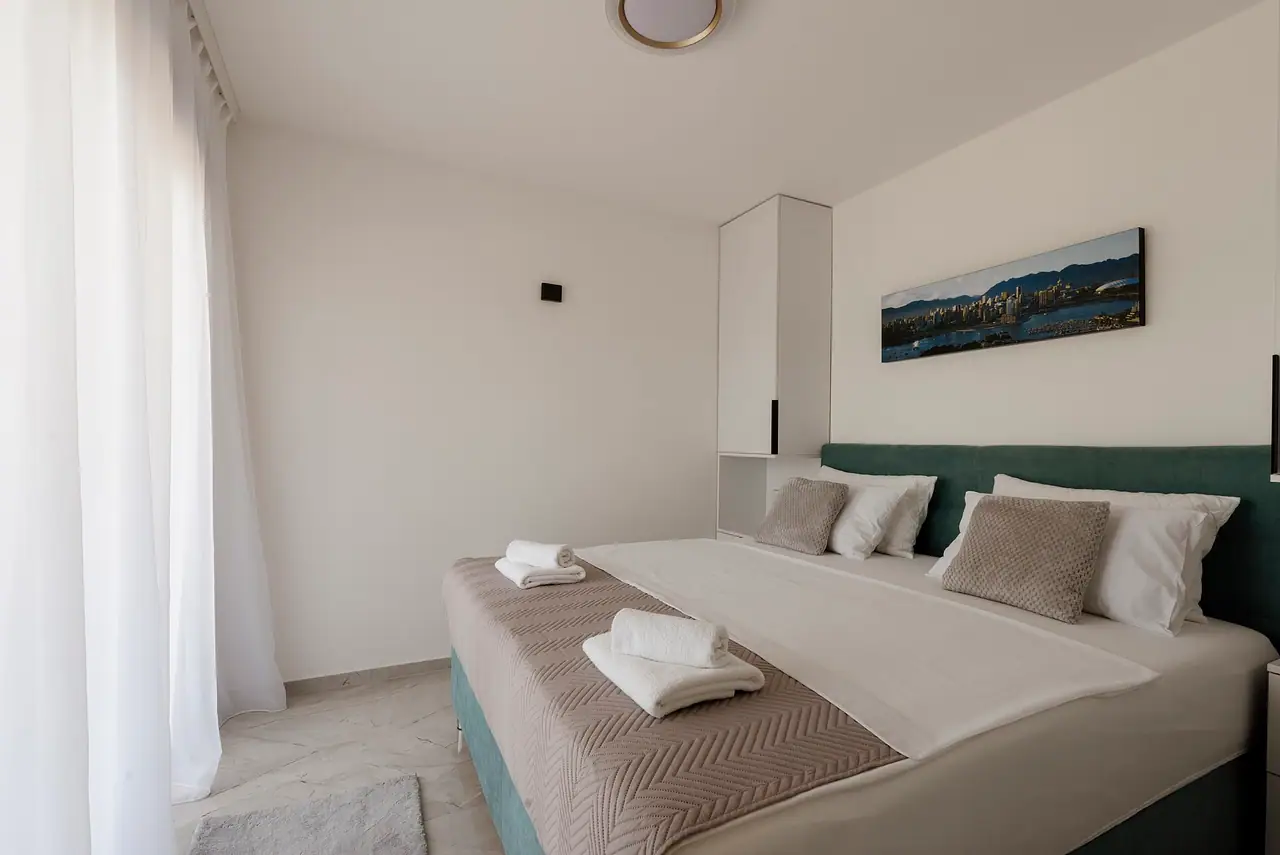

Room in Dragan’s home, Marijin Dvor
€39a nightFree cancellationPay on arrival
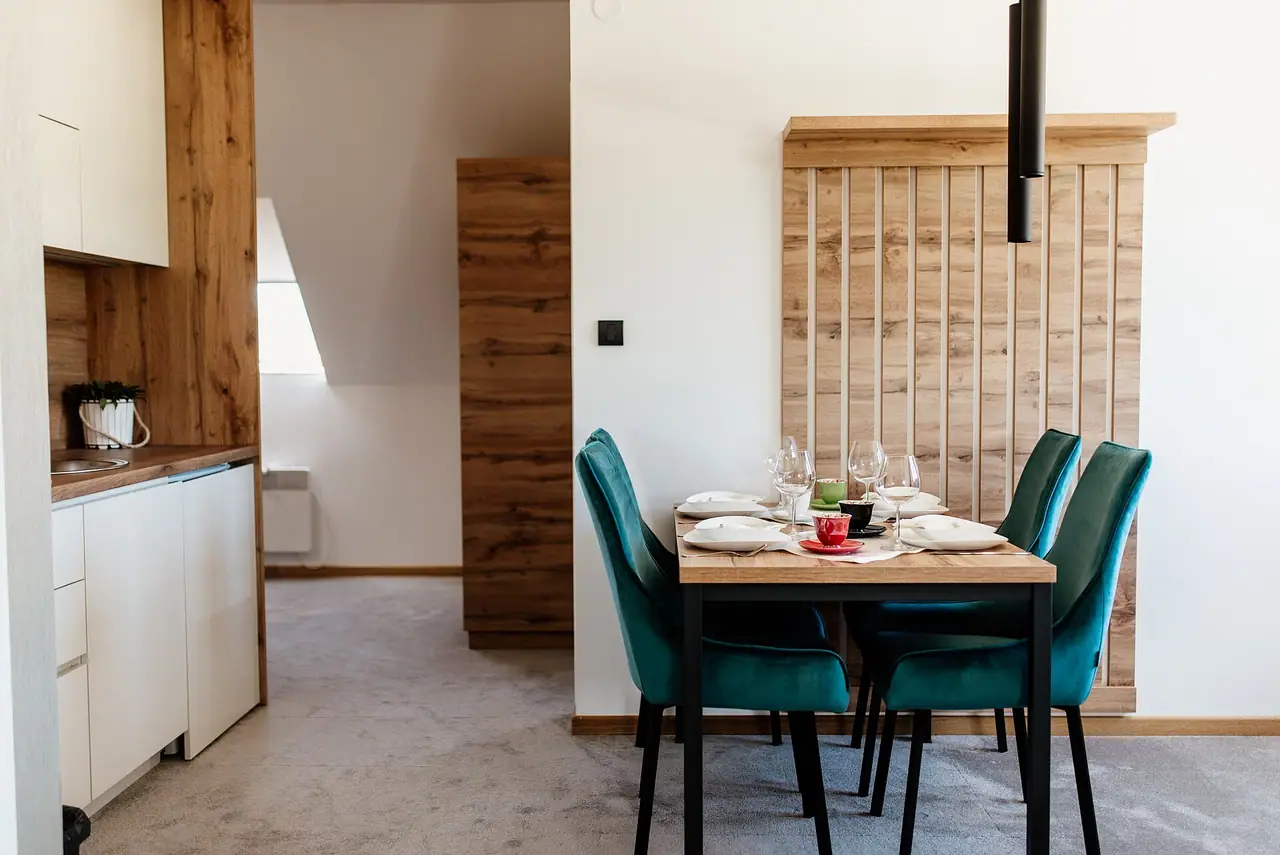


Studio Đul in Baščaršija
€64a nightFree cancellationPay on arrival

Studio Lipa in Baščaršija
€60a nightFree cancellationPay on arrival

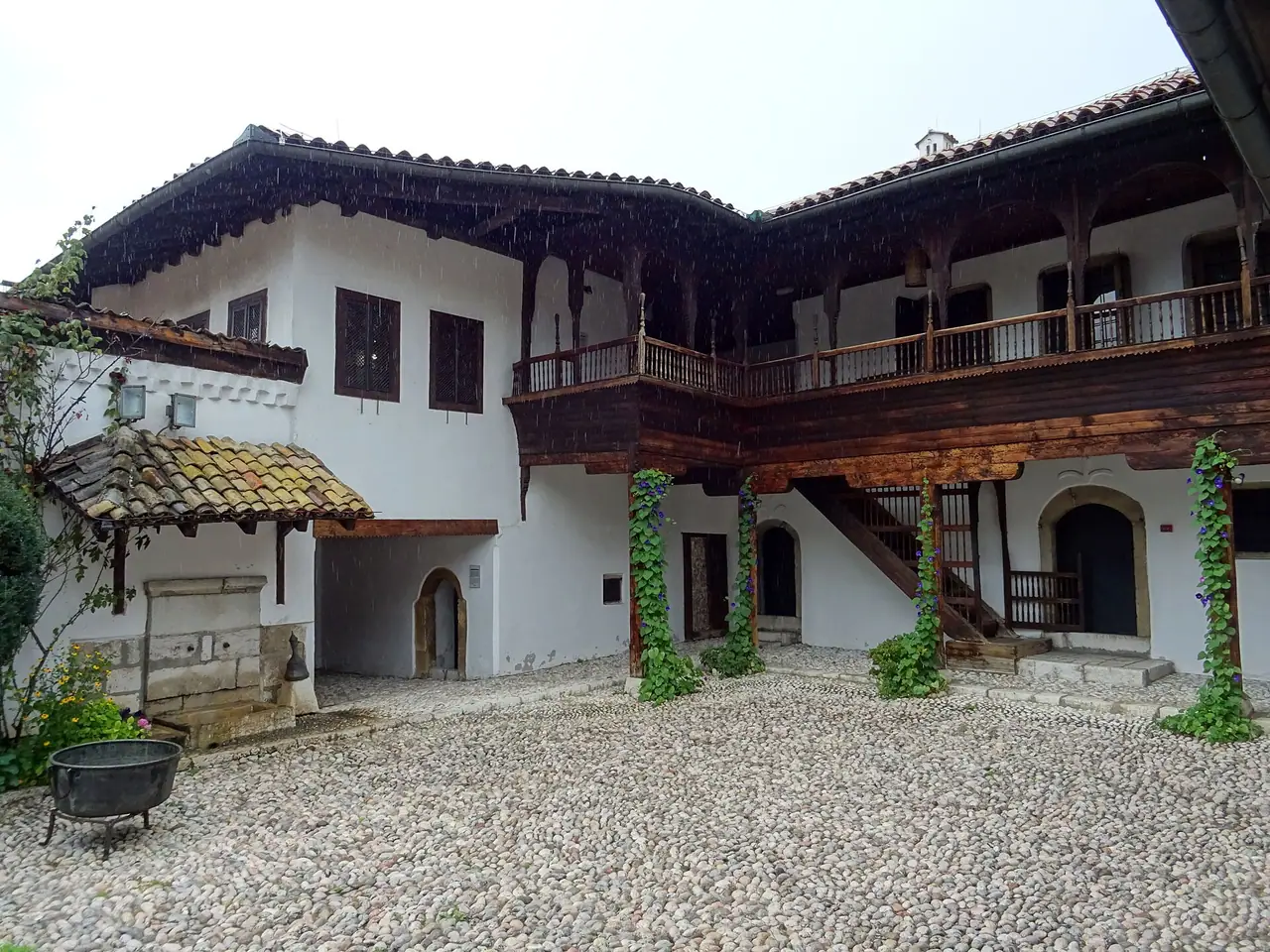
Guide
Sarajevo: a guide to your stay
Where to stay in Sarajevo, what to see, how to get there and when to go: a city of Baščaršija and coffee, with the Olympic mountains less than an hour’s drive away.
Why Sarajevo
Sarajevo is the capital and largest city of Bosnia and Herzegovina, the capital of the Federation of Bosnia and Herzegovina and the seat of Sarajevo Canton. It lies in the Sarajevo valley, in the middle of the Dinaric Alps, and the Miljacka river flows through the city from east to west. Around it rise the mountains of Treskavica, Bjelašnica, Jahorina, Trebević and Igman. The last four were venues for the 1984 Winter Olympics, which is why people still call them the Olympic mountains. According to the 2013 census, the city’s four municipalities have 275,524 inhabitants.
The city grew up in the mid-15th century, around an Ottoman bazaar on the Miljacka. After 1878 it gained Austro-Hungarian streets, museums and the City Hall, and in 1885 a tram, one of the first in Europe. People of four faiths have lived side by side here for centuries, which is why Sarajevo is also called the Jerusalem of Europe. The old town and the centre are easy to explore on foot, and the ski slopes are less than an hour’s drive away.
Where to stay in Sarajevo
In Sarajevo, everything on Najmio is let by local hosts: flats by the night in the city, apartments for couples and families, and rooms in a family home. There are no hotel rooms and no middlemen. You deal directly with a host who lives nearby, and you pay when you arrive.
- The old town. The most sought-after stays are apartments near Baščaršija. The bazaar, the mosques, the old taverns (kafanas) and the ćevapi grills are on your doorstep, and you won’t need a car. The streets are paved with stone and steep in places, so ask your host how far the walk to the flat is.
- The centre. Apartments between the old town and the Austro-Hungarian streets. Museums, theatres and cafés are a few minutes’ walk away, and the tram stops nearby.
- Along the Miljacka. Flats by the river, with bridges and a walk along the bank. The tram runs beside the river, so both Baščaršija and Ilidža are easy to reach.
The host sets the price, and you see all of it, cleaning included, before you book. During the film festival in August, at weekends and around public holidays, book ahead. If you are coming to ski, you can also look for accommodation on Jahorina and Bjelašnica.
Things to see and do in Sarajevo
Baščaršija and the old town
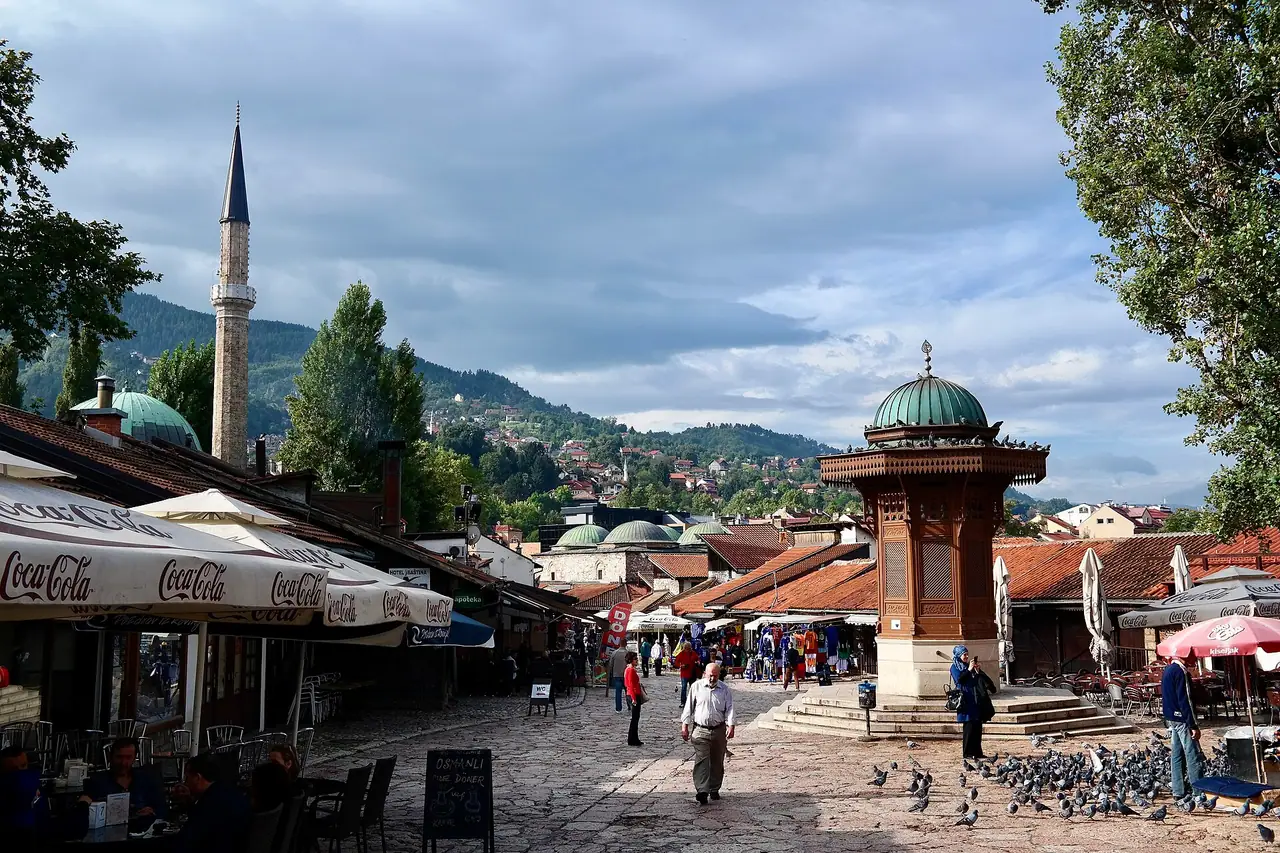
Baščaršija is the old Ottoman bazaar at the eastern end of the centre and the liveliest part of the city. It dates from 1462, when the Ottoman governor built a han, or inn for travelling merchants, and rows of shops along the Miljacka. Each lane once belonged to a single craft, and in Kazandžiluk copper coffee sets are still hammered out today. In the middle of the bazaar stands the Sebilj, a wooden fountain under a green dome. Baščaršija is protected as a national monument.
A few minutes’ walk away is the Gazi Husrev-beg Mosque, from 1531, with a 47-metre minaret: the best-known building in old Sarajevo. You can visit outside prayer times; cover your shoulders and knees, and women their hair too. Come in the morning, when the craftsmen are at work, or at dusk, when the cafés fill up. Wear flat shoes, as the stone is worn smooth.
The Latin Bridge and the City Hall
The Latin Bridge (Latinska ćuprija) is an Ottoman-era stone bridge over the Miljacka. A court record from 1565 says it was built by Ali Ajni-beg, and it was rebuilt after a flood in 1791. At its northern end, on 28 June 1914, the heir to the Austro-Hungarian throne, Franz Ferdinand, was assassinated, the event that set off the First World War.
The City Hall, or Vijećnica, the old town hall on the edge of the bazaar, was designed in 1891 in the pseudo-Moorish style. From 1949 it housed the National and University Library. In August 1992, during the siege of the city, it was hit by shells and burned down, and most of the books burned with it. It was restored and reopened in 2014, and today it is the seat of the mayor and the City Council.
Places of worship of four faiths
Sarajevo is one of the few cities in Europe where a mosque, a Catholic church, an Orthodox church and a synagogue stand in the same part of town. Besides the Gazi Husrev-beg Mosque, the centre has the neo-Gothic Sacred Heart Cathedral and the Old Orthodox Church from Ottoman times. Sephardic Jews arrived after their expulsion from Spain at the end of the 15th century, and their quarter grew up over a few blocks of Baščaršija.
Trebević and the cable car
Trebević (1,627 m) rises right above the city, to the south-east. The Trebević cable car opened in 1959, was completely destroyed in the war and has been running again since 6 April 2018. It is 2,200 metres long: from the lower station in the old part of the city, at 583 metres, to the upper station, at 1,160 metres, the ride takes less than ten minutes.
Trebević is also home to the Olympic bobsleigh and luge track from 1984, which is 1,300 metres long. It was damaged in the war but has largely survived, and in 2025 an educational trail about the Olympic Games was laid out beside it.
The Tunnel of Hope Museum
The Tunnel of Hope Museum preserves the southern end of the tunnel dug under the airport runway in 1993, during the siege of the city, which lasted from April 1992 to February 1996. The tunnel was about 800 metres long, about a metre wide and so low that people had to stoop to get through. Until the end of the war, food, medicine and thousands of people a day passed through it. You enter the museum through a family house in Butmir and walk through a short stretch of the original tunnel. Allow an hour to an hour and a half; tickets are paid in cash.
Vrelo Bosne and Ilidža
Vrelo Bosne is the source of the river Bosna, at the foot of Igman on the western edge of the city. The water rises from some thirty smaller springs and spreads into clear pools with wooden footbridges, swans and ducks. From Ilidža, the Velika aleja leads to the spring: an avenue of plane and horse chestnut trees, about 3 km long and closed to cars. Walk it, cycle it or ride it in a horse-drawn carriage (fijaker); the tram runs to Ilidža. By the warm springs there, the Romans had a settlement called Aquae Sulphurae.
Day trips from Sarajevo
- Jahorina, 29 km: the largest ski resort in Bosnia and Herzegovina, where the women’s alpine events were held in 1984.
- Bjelašnica, 27 km: the Olympic mountain of the men’s alpine events, and in summer, trails to mountain villages such as Lukomir.
- Skakavac waterfall, 98 metres high, just outside the city.
- Konjic, 57 km: a town on the Neretva, on the railway to Mostar.
- Mostar, 125 km: the Old Bridge and the south of Herzegovina, for a full day.
Coffee, ćevapi and pita
Sarajevo is a city of coffee. Here they call it kahva, and it comes in a copper džezva, with a small cup called a fildžan, a sugar cube and rahat lokum, the local Turkish delight. It is drunk slowly, over conversation. For how it is made and drunk, read the story Coffee, the slow way.
Ćevapi are considered the national dish of Bosnia and Herzegovina. In Sarajevo they are served in plain somun flatbread with chopped onion, and often with kajmak, a rich clotted cream; in Baščaršija you will find them in the ćevapi grills along the coppersmiths’ lanes. Try pita too. Here, burek is made only with meat; sirnica is filled with cheese, zeljanica with greens and cheese, and krompiruša with potato, and together they are all called pite.
Getting to Sarajevo
| From | Distance | Driving time |
|---|---|---|
| Sarajevo Airport (SJJ) | 12 km | about 15 min |
| Mostar | 125 km | about 2 h 15 min |
| Banja Luka | 252 km | about 3 h 15 min |
Sarajevo Airport is in Butmir, west of the centre. A city bus and a trolleybus run into town, or you can take a taxi. Trains run by the Railways of the Federation of BiH also leave Sarajevo for Mostar and go on to Ploče on the Adriatic coast; the timetable changes with the season, so check it before you travel. The city has a main bus station and a railway station, and buses run to the larger towns in the country and the region.
Jahorina is 29 km away, about 35 minutes by car, and Bjelašnica 27 km, about 40 minutes. In winter, expect snow on the mountain roads.
When to go
Sarajevo has four distinct seasons, and rain and snow are spread through the whole year. January is the coldest month, averaging around freezing, and July and August are the warmest, averaging about 20 °C. The mountains around the city hold their snow for a long time: from the higher parts of town, you can see the white cap of Bjelašnica from mid-October to early June.
- Spring (April to June): longer days and green hillsides, a good time for walks, Trebević and Vrelo Bosne.
- Summer (July and August): warm and lively. In August there is the Sarajevo Film Festival, the largest film festival in South-East Europe, held since 1995. Book ahead.
- Autumn (September and October): pleasant for seeing the city and for trips to the mountains.
- Winter: skiing on Jahorina and Bjelašnica, less than an hour’s drive away, and the Sarajevo Winter festival.
Practical tips
- Paying for your stay: on Najmio, you pay your host when you arrive, with no booking fee.
- Money: the currency is the convertible mark (KM), and one euro is worth exactly 1.95583 KM. Take cash for the bazaar and for museum tickets. There is more in the story Paying your way in Bosnia and Herzegovina.
- Registration and tourist tax: your host registers you as a guest and charges the tourist tax per person per night, under local rules. Bring your ID card or passport.
- Getting around: the old town and the centre are easy to see on foot. Public transport is made up of trams, trolleybuses and buses, and the tram also takes you from the centre to Ilidža. If you are coming by car, ask your host about parking before you arrive.
- Places of worship: dress modestly when you go into mosques and churches, with your shoulders and knees covered.
Have a home in Sarajevo?
List it on Najmio and host the people who come to Sarajevo. There's no sign-up fee: hosts pay a flat 10%, and only after a completed stay.
Questions
About staying in Sarajevo
Q.01Accommodation
How much does an apartment in Sarajevo cost per night?
On Najmio, stays in and around Sarajevo start from €32 a night. The host sets the price, and you see the full price, cleaning included, before you book. In August, at weekends and around public holidays, book ahead.
Related
Q.02Accommodation
Where is the best place to stay in Sarajevo?
In the old town, near Baščaršija, if you want the old bazaar and coffee on your doorstep. The centre is a good choice if you want museums, theatres and the tram close by, and flats along the Miljacka give you walks by the river and an easy trip to every part of the city.
Related
Q.03Accommodation
How many apartments are there in Sarajevo?
Najmio currently has 15 stays in and around Sarajevo, within 30 km of the centre. Each one is the home of a local host, not a hotel room.
Related
Q.04Getting there
How far is the airport from Sarajevo city centre?
Sarajevo Airport (SJJ) is 12 km from the centre, about 15 minutes by car. A city bus and a trolleybus run into town, or you can take a taxi.
Related
Q.05Getting there
How far is Sarajevo from Mostar and Banja Luka?
From Mostar it is 125 km, about 2 h 15 min by car. From Banja Luka it is 252 km, about 3 h 15 min. A train also runs to Mostar; check the timetable before you travel.
Related
Q.06Getting there
How far is Sarajevo from Jahorina and Bjelašnica?
Jahorina is 29 km away, about 35 minutes by car, and Bjelašnica is 27 km, about 40 minutes. Both mountains held Olympic ski races in 1984.
Related
Q.07Sightseeing
What is there to see in Sarajevo?
Baščaršija and the Gazi Husrev-beg Mosque, the Latin Bridge and the City Hall (Vijećnica), and then the cable car up Trebević. Outside the centre are the Tunnel of Hope Museum and Vrelo Bosne, the source of the river Bosna.
Related
Q.08Sightseeing
When is the best time to visit Sarajevo?
Spring and autumn are the best seasons for walking round the city and for day trips. In August there is the Sarajevo Film Festival, the largest film festival in South-East Europe, and in winter people come to ski on Jahorina and Bjelašnica.
Related
Q.09Practical tips
How do I pay for my stay?
On Najmio, you pay your host when you arrive, with no booking fee. Bosnia and Herzegovina uses the convertible mark (KM), and one euro is worth exactly 1.95583 KM.
Related
Q.10Practical tips
Do I need a car in Sarajevo?
Not for the city: the old town and the centre are easy to see on foot, and trams, trolleybuses and buses run to the rest of the city. A car is handy for the mountains and day trips; if you are coming by car, ask your host about parking.
Related
Something else? Write to info@najmio.com or call +387 66 111 909, and our customer support will answer as soon as possible.