Apartments & places to stay in Mostar
Stari Most arches over the green Neretva, and the old town’s stone lanes climb both banks. Blagaj and Počitelj make an easy day out.
- From Sarajevo
- 125 km
- To Mostar Airport
- 8 km
- Old Bridge completed
- 1566
- Stays nearby
- 8

MostarHerzegovina
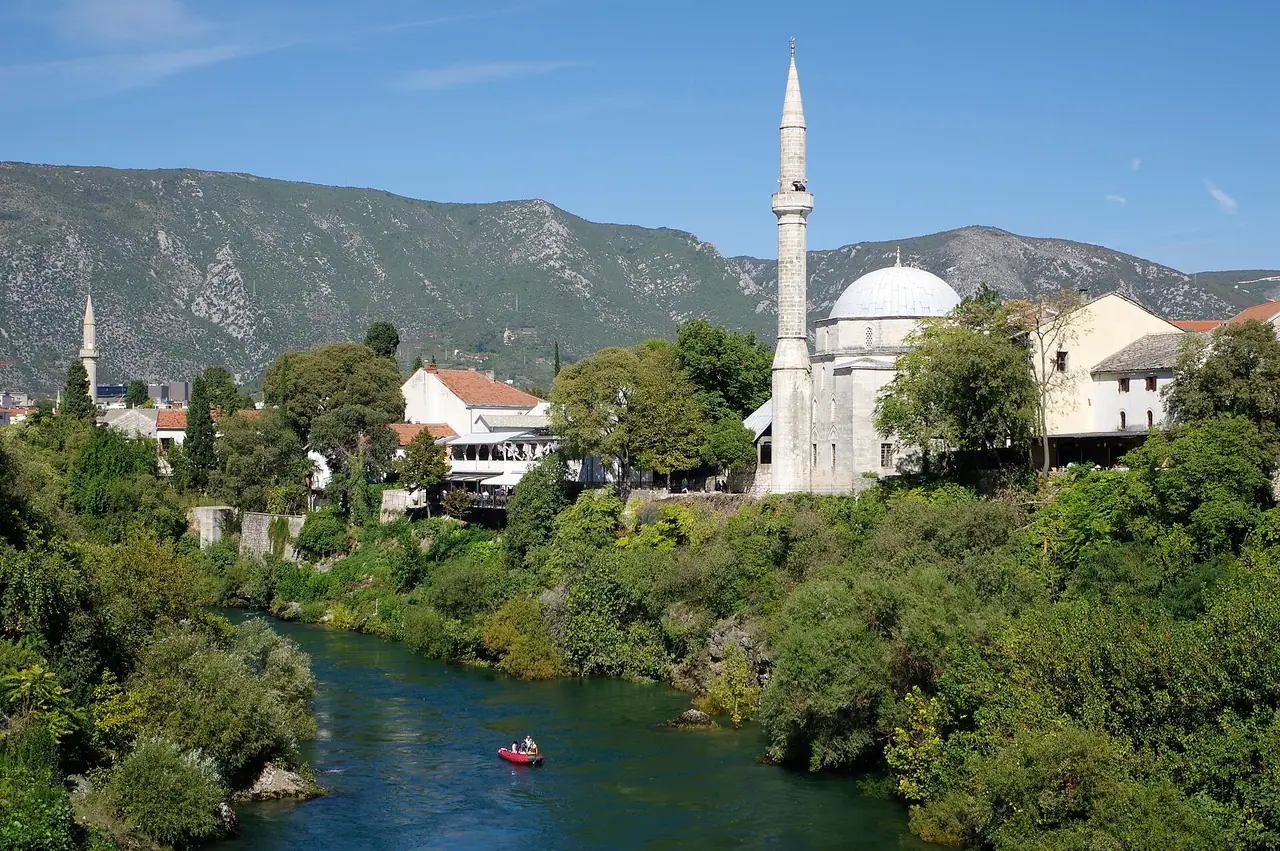
Photo: Berthold Werner, CC BY-SA 4.0
Where to stay
Stays in Mostar
8 stays within 30 km, the closest first.
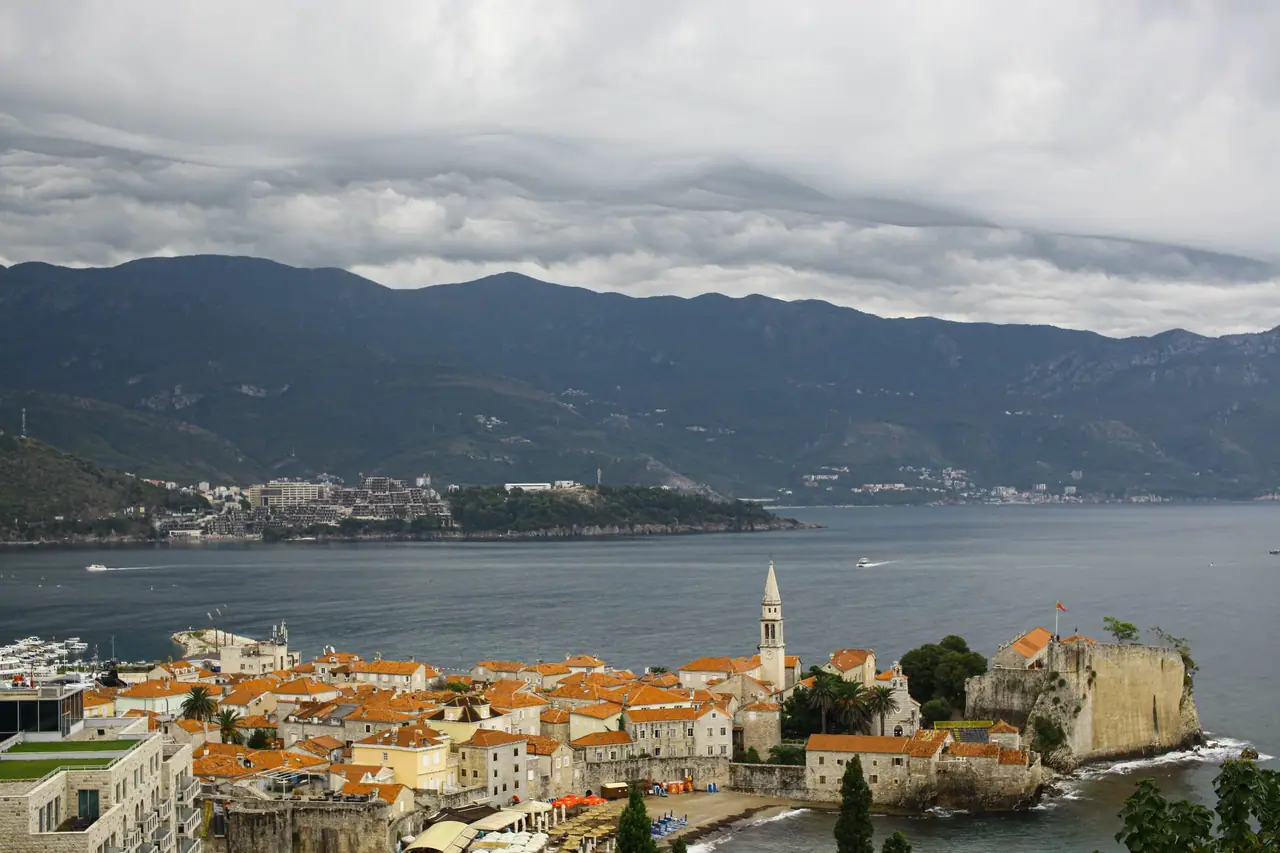

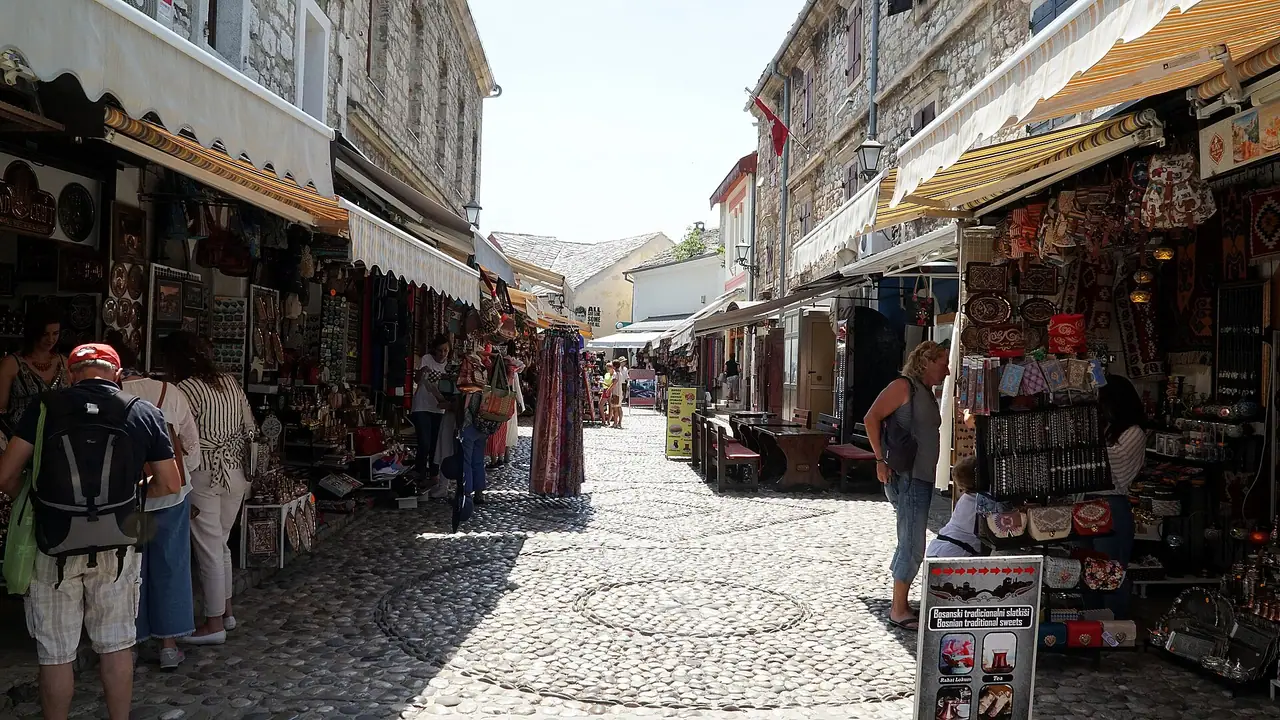

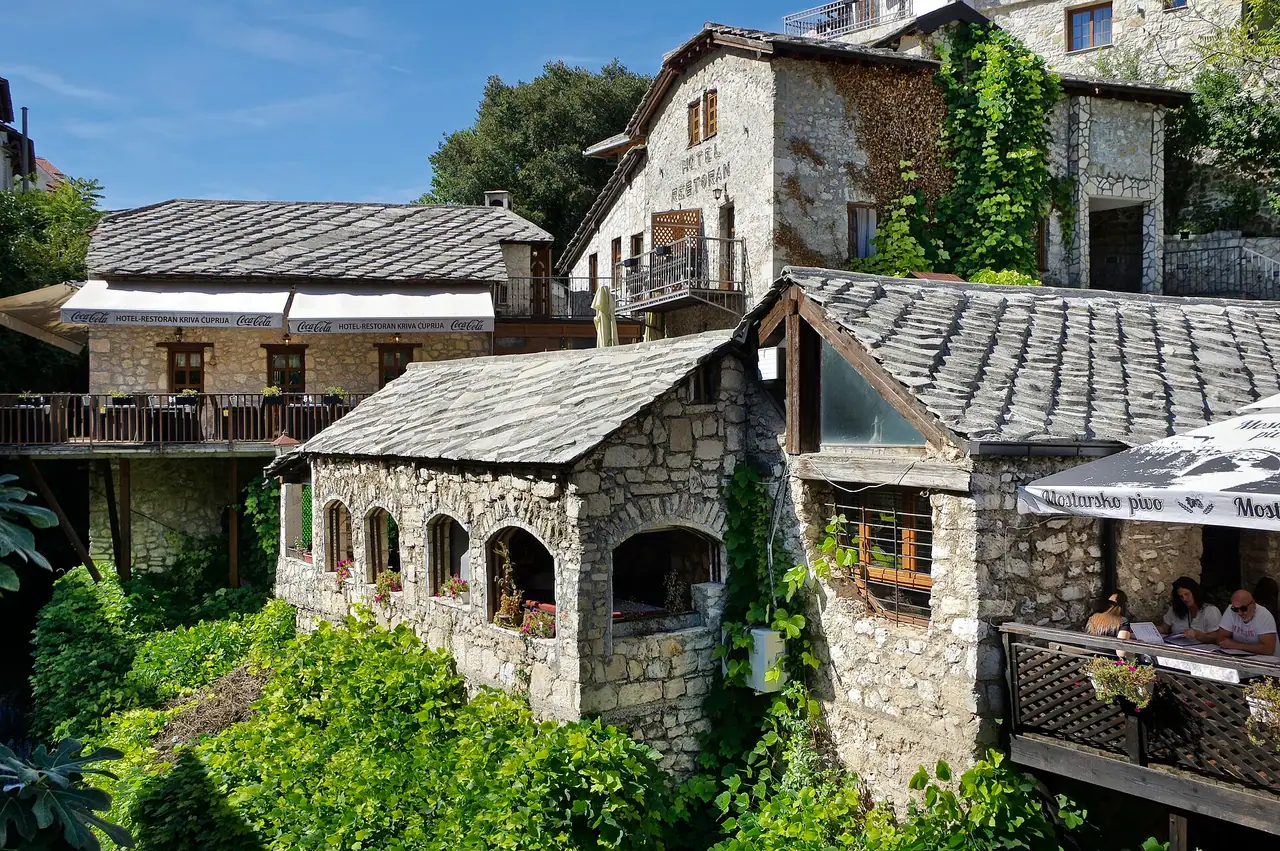

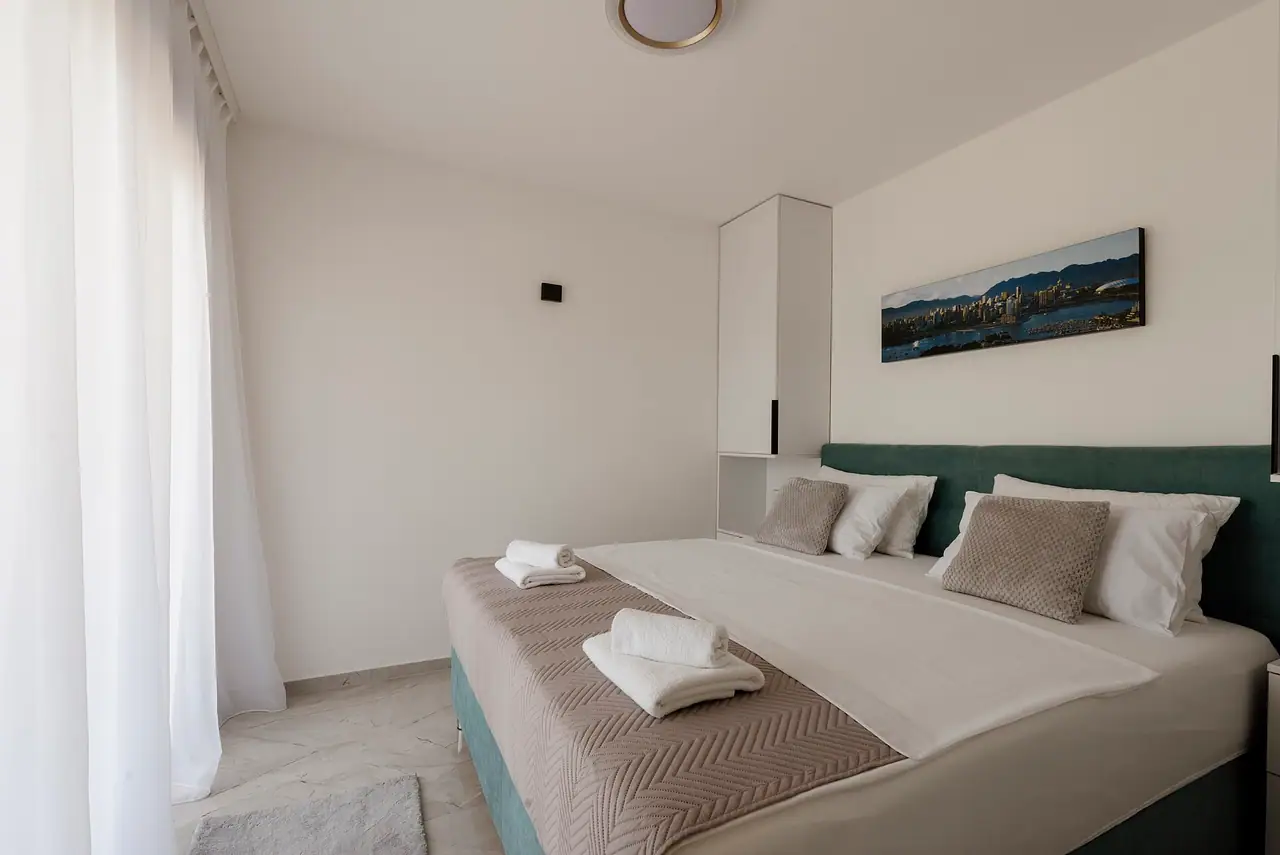

Guesthouse Smokva, Cernica
€50a nightFree cancellationPay on arrival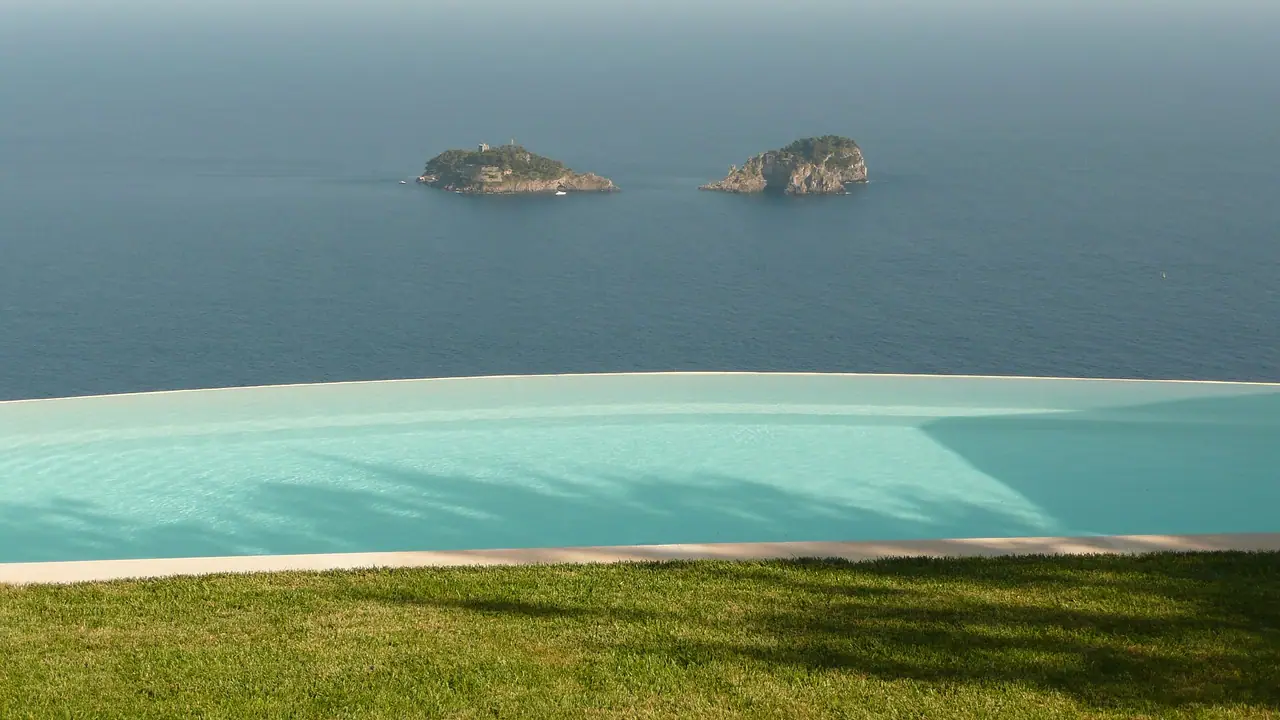






Guide
Mostar: a guide to your stay
Where to stay in Mostar, what to see, how to get there and when to go: a city on the Neretva, home to the Old Bridge of 1566.
Why Mostar
Mostar is the largest city in Herzegovina and the seat of Herzegovina-Neretva Canton, in the Federation of Bosnia and Herzegovina. It lies on the Neretva, in a basin ringed by hills, with the mountains of Velež and Prenj nearby. It takes its name from the mostari, the bridge keepers who guarded the bridge over the river in Ottoman times. According to the 2013 census, 105,797 people live in the City of Mostar, which makes it the fifth-largest city in the country.
The city is known for the Old Bridge and the old town around it, which have been on the UNESCO World Heritage List since 2005. Mostar is also the sunniest city in Bosnia and Herzegovina, and it was here, in 1901, that the country’s highest temperature was recorded: 46.2 °C. Blagaj, Počitelj, Kravice and Medjugorje are a short drive away, so many people stay in Mostar for a few days and explore the area from here.
Where to stay in Mostar
In Mostar, everything on Najmio is let by local hosts: flats by the night, apartments for couples and families, houses with a garden and rooms in a family home. There are no hotel rooms and no middlemen. You deal directly with a host who lives nearby, and you pay when you arrive.
- The centre and the old town. The most sought-after stays are apartments in the centre of Mostar, a few minutes’ walk from the Old Bridge and the bazaar. Cafés, shops and the market are close at hand, so you won’t need a car.
- Along the Neretva. Apartments by the river and on quieter streets away from the bazaar, with views of the water or of the hills around the city. The old town is usually a short walk or drive away.
- The edge of town and the villages around Mostar. Holiday homes with a garden and a barbecue, for those coming by car and planning trips to Blagaj, Počitelj and Kravice.
The host sets the price, and you see all of it, cleaning included, before you book. In summer, when the city has the most day-trippers, places near the Old Bridge fill up fast, so book ahead.
Things to see and do in Mostar
Stari Most, the Old Bridge
Stari Most is a single-arched stone bridge over the Neretva, completed in 1566. It was designed by the builder Mimar Hajrudin, a pupil of Mimar Sinan. It is only four metres wide and stands high above the river, guarded at either end by the Halebija and Tara towers. The bridge was destroyed in the war on 9 November 1993. It was rebuilt from local stone, using old building techniques, and reopened on 23 July 2004. A year later, the Old Bridge and the old town around it were added to the UNESCO World Heritage List.
Jumping from the bridge into the cold Neretva is a tradition, and a diving competition has been held every summer, at the end of July, since 1968. In the tower beside the bridge is the Old Bridge Museum, which shows how the bridge was rebuilt. For the classic view, go down to the pebbly bank below the bridge, early in the morning or in the early evening.
The old town and Kujundžiluk
Around the bridge, on both banks, is the old town, with stone houses, shops and cafés. Its main street, Kujundžiluk, is named after the kujundžije, the goldsmiths who once made and sold jewellery there. It still sells copper and bronze work decorated with the Old Bridge, pomegranates and stećci, the medieval tombstones.
Nearby is the Koski Mehmed Pasha Mosque from 1617, open to visitors, with a minaret you can climb. Just round the corner is the Tepa market, busy since Ottoman times, with fruit and vegetables from Herzegovina. The city also has the Karađoz-beg Mosque from 1557, one of the best known in Mostar.
The Crooked Bridge
The Crooked Bridge (Kriva ćuprija) is a small stone bridge over the Radobolja, a stream that flows through the old town into the Neretva, a short walk west of the Old Bridge. Tradition dates it to 1558, eight years before the Old Bridge, so it is often described as its model. A flood swept it away in December 2000, and it was rebuilt in 2001. The steps are worn smooth and slippery when wet.
Bišćević House
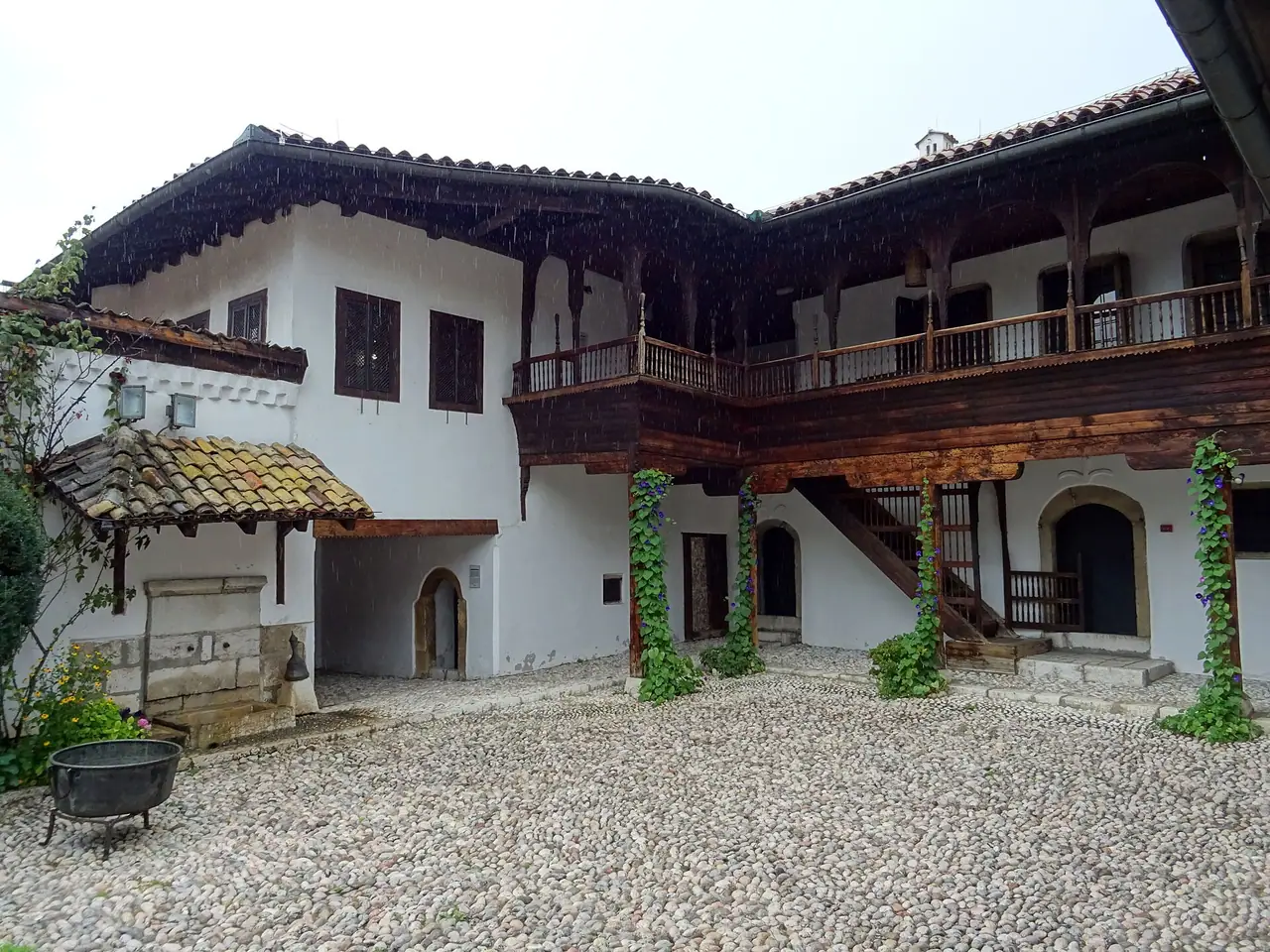
Bišćević House is a 17th-century Ottoman family home, a few minutes’ walk north of the Old Bridge. Behind a high wall on the street side is a courtyard paved with river pebbles, and upstairs a sitting room with low cushioned benches (minderluk) and kilims, its windows facing the Neretva. The house is still partly a family home and partly a museum. A visit takes about half an hour.
The Neretva
The Neretva is 225 km long and the largest karst river in the eastern part of the Adriatic basin, and Mostar is the largest city on its banks. Through the city it runs green and cold, between rocky banks. Downstream from Mostar it passes Blagaj, Počitelj and Čapljina and crosses into Croatia on its way to the sea. The railway from Sarajevo to Mostar follows the Neretva valley and is said to be one of the most beautiful in the region.
The Partisan Memorial Cemetery
The Partisan Memorial Cemetery, for the fighters who fell in the Second World War, was designed by the architect Bogdan Bogdanović. The memorial brings together architecture, water and greenery. It is one of the symbols of the city and has been a national monument of Bosnia and Herzegovina since 2006.
Day trips from Mostar
- Blagaj, south-east of the city: the Buna Spring, one of the most powerful karst springs in Europe, and the Blagaj Tekke, a dervish lodge from around 1520, right by the water. Above the village stands the fortress of Stjepan grad.
- Počitelj: a fortified town on the left bank of the Neretva, with the Hadži Alija Mosque from 1563, a clock tower and the Gavrankapetan Tower. It has been a national monument since 2003.
- Kravice waterfall on the Trebižat river, south of Ljubuški: a tufa cascade about 25 metres high. In summer it is a favourite spot for a swim and a picnic, and in spring the falls are at their fullest.
- Medjugorje: a Catholic place of pilgrimage, with St James’s Church, Apparition Hill and Križevac (Cross Mountain).
Food and local specialities
Mostar’s cooking brings together eastern and western influences. On the table you will find ćevapi, burek, sarma, japrak and dolma (stuffed cabbage, leaves and vegetables), dishes baked under a sač, and đuveč and sataraš (vegetable stews), and for something sweet, baklava, hurmašice, tufahije (poached stuffed apples) and tulumbe. For coffee in the old town, read the story Coffee, the slow way.
At the Tepa market, figs and pomegranates are what people look for at the end of summer and in autumn, and honey is made all over Herzegovina. Herzegovina is wine country too: the neighbouring municipality of Čitluk has the largest vineyards in the country, with žilavka, blatina and vranac.
Getting to Mostar
| From | Distance | Driving time |
|---|---|---|
| Mostar Airport (OMO) | 8 km | about 15 min |
| Makarska | 114 km | about 1 h 45 min |
| Sarajevo | 125 km | about 2 h |
| Dubrovnik Airport (DBV) | 165 km | about 2 h 45 min |
The times for Makarska and Dubrovnik assume no wait at the Croatian border; in summer, the queue at the crossing can take a while. Mostar Airport is in Ortiješ, south-east of the city. A train also runs from Sarajevo to Mostar, and the city has two bus stations and a railway station.
Croatia is in the Schengen Area, so there are full checks at the border. Bring your passport and check the rules for your nationality before you travel.
When to go
Mostar has a warm climate, with hot, dry summers and mild, wet winters. In summer, temperatures often climb above 40 °C. July averages about 26 °C, and January about 5 °C. The sunniest months are June to September, and snow is rare and usually melts within a few hours or days.
- Spring (April to June): warm and green, the best time for walks in the old town and day trips. Kravice is at its fullest then.
- Summer (July and August): hot and at its liveliest, with the diving from the Old Bridge at the end of July. Book ahead.
- Autumn (September and October): still warm, with fewer crowds, and figs and pomegranates at the market.
- Winter: mild and quiet, for the old town without the crowds.
At any time of year, the old town is quietest early in the morning and in the early evening, once the tour groups have left.
Practical tips
- Paying for your stay: on Najmio, you pay your host when you arrive, with no booking fee.
- Money: the currency is the convertible mark (KM), and one euro is worth exactly 1.95583 KM. Take cash for the market and for smaller entry fees. There is more in the story Paying your way in Bosnia and Herzegovina.
- Registration and tourist tax: your host registers you as a guest and charges the tourist tax per person per night, under local rules. Bring your ID card or passport.
- Getting around: the old town is easy to see on foot. The cobbles and stone steps are steep and slippery, so wear comfortable shoes. A local bus runs to Blagaj, and for Počitelj, Kravice and the airport, a car or a taxi helps. If you are coming by car, ask your host about parking before you arrive.
- Visiting mosques and the tekke: cover your shoulders and knees. In the Blagaj Tekke you take off your shoes, and women cover their hair.
Have a home in Mostar?
List it on Najmio and host the people who come to Mostar. There's no sign-up fee: hosts pay a flat 10%, and only after a completed stay.
Questions
About staying in Mostar
Q.01Accommodation
How much does an apartment in Mostar cost per night?
On Najmio, stays in and around Mostar start from €31 a night. The host sets the price, and you see the full price, cleaning included, before you book. In summer and around public holidays, book ahead.
Related
Q.02Accommodation
Where is the best place to stay in Mostar?
In the centre, near the old town and the Old Bridge, if you want everything a few minutes’ walk away. Apartments along the Neretva and on calmer streets away from the bazaar are quieter, and the houses on the edge of town and in the villages around Mostar suit you if you are coming by car and planning day trips.
Related
Q.03Accommodation
How many apartments are there in Mostar?
Najmio currently has 8 stays in and around Mostar, within 30 km of the centre. Each one is the home of a local host who lives nearby, not a hotel room.
Related
Q.04Getting there
How far is Mostar from Sarajevo?
About 125 km, or about two hours by car on the M17. There is also a train between Sarajevo and Mostar, on the line through the Neretva valley.
Related
Q.05Getting there
What is the nearest airport to Mostar?
Mostar Airport (OMO), 8 km from the city, about 15 minutes by car. Dubrovnik Airport (DBV) is 165 km away, about 2 h 45 min by car when there is no wait at the border.
Related
Q.06Sightseeing
What is there to see in Mostar?
Stari Most, the Old Bridge, and the old town with Kujundžiluk; the Crooked Bridge over the Radobolja; the 17th-century Bišćević House; and the Koski Mehmed Pasha Mosque, whose minaret is open to visitors.
Related
Q.07Sightseeing
When was the Old Bridge in Mostar destroyed and rebuilt?
Stari Most was completed in 1566. It was destroyed in the war on 9 November 1993, rebuilt from local stone and reopened on 23 July 2004. Since 2005, together with the old town around it, it has been on the UNESCO World Heritage List.
Related
Q.08Sightseeing
What is there to see around Mostar?
Blagaj, with the Buna Spring and the tekke; the fortified town of Počitelj above the Neretva; Kravice waterfall on the Trebižat; and Medjugorje. Each of these makes a half-day or full-day trip.
Related
Q.09Sightseeing
When is the best time to visit Mostar?
In spring (April to June) and autumn (September and October), when it is warm but not too hot. Summers are hot, with temperatures that can go above 40 °C, and winters are mild, with snow a rarity.
Related
Q.10Practical tips
How do I pay for my stay?
On Najmio, you pay your host when you arrive, with no booking fee. Bosnia and Herzegovina uses the convertible mark (KM), and one euro is worth exactly 1.95583 KM.
Something else? Write to info@najmio.com or call +387 66 111 909, and our customer support will answer as soon as possible.