Apartments & places to stay in Foča
A university town where the Ćehotina meets the Drina, near Sutjeska
Foča lies in south-eastern Bosnia, where the Ćehotina flows into the Drina below steep wooded hills. It was the Ottoman seat of the Sanjak of Herzegovina for about a century and is now a university town with medical and theology faculties. Most visitors come for the outdoors: Sutjeska, the oldest national park in the country, with the Perućica forest and Maglić, the highest peak, lies to the south, and rafting runs on the Tara and the Drina. In town, the Aladža Mosque was rebuilt and reopened in 2019.
- From Sarajevo
- 84 km
- Maglić, highest peak in BiH
- 2,386 m
- Sutjeska National Park founded
- 1962
- Stays nearby
- 1
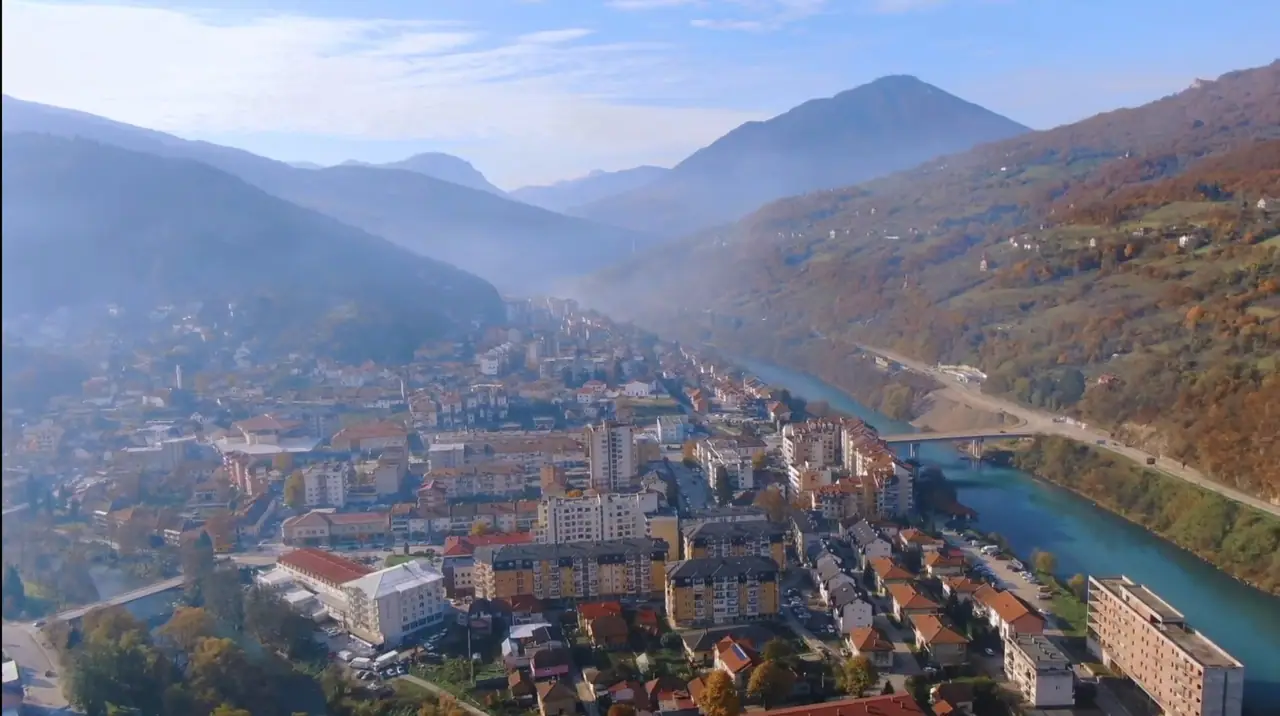
FočaThe Drina valley and the east
Photo: ТодорС, CC0
Where to stay
Stays near Foča
1 stay within 30 km, the closest first.


Guide
Foča: a guide to your stay
Where to stay in Foča, what to see, how to get there and when to go: a town where the Ćehotina flows into the Drina, close to Sutjeska National Park, the oldest in the country.
Why Foča
Foča is a town in the south-east of Bosnia and Herzegovina, in Republika Srpska, close to the border with Montenegro. It lies on the right bank of the Drina, where the Ćehotina flows into it. Not far from the town, at Šćepan Polje, the Drina itself begins. In the Middle Ages Foča was a trading post on the Dubrovnik Road, and from 1470 to 1572 it was the seat of the Sanjak of Herzegovina. Later it was known for its goldsmiths and for the smiths who forged knives and sabres. Today it is a university town, with a Faculty of Medicine and the St Basil of Ostrog Faculty of Orthodox Theology.
Most visitors, though, come for the nature. South of the town is Sutjeska National Park, with the Perućica primeval forest and Maglić, the highest peak in the country. From spring to autumn, people raft down the Tara and the Drina. That makes Foča a good base for a few days: a day in the mountains, a day on the river, and the town in the evening.
Where to stay in Foča
In Foča, everything on Najmio is let by local hosts: flats by the night in town, apartments for families and groups of friends, houses and holiday homes in the villages, and rooms in a family home. There are no hotel rooms and no middlemen. You deal directly with a host who lives nearby, and you pay when you arrive.
- The town centre. A flat by the night in the centre of Foča suits you if you want shops, cafés and the Aladža Mosque a few minutes’ walk away, and are happy to drive to Sutjeska and the river.
- Along the Drina and the Ćehotina. Apartments closer to the river are quieter, with views of the water.
- The villages around town. Houses and holiday homes in the villages give you a garden, space and quiet. You will need a car.
The host sets the price, and you see all of it, cleaning included, before you book. In summer, during the rafting season, and around public holidays, places fill up faster, so book ahead. If you are coming for the rafting, ask your host how far the house is from the camps on the Drina.
Things to see and do in Foča
Sutjeska National Park
Sutjeska National Park was founded in 1962 and is the oldest national park in Bosnia and Herzegovina. It stretches south of Foča, along the border with Montenegro. The Sutjeska river has cut a canyon about 1,200 metres deep through it. The park contains Maglić, at 2,386 m the highest peak in the country, and the climb is demanding even for experienced mountaineers. Zelengora has nine glacial lakes, known as the Mountain Eyes (Gorske oči), and several mountain huts have been restored. Trnovačko Lake is just across the border, in Montenegro.
Perućica and Skakavac waterfall
Perućica is a strict nature reserve inside the park, a primeval forest covering about 1,400 hectares. Some of its trees are around 300 years old and more than 60 metres tall. Deep in the forest is Skakavac waterfall, about 75 metres high. You can only visit Perućica with the park’s rangers, so arrange your visit in advance.
Tjentište
At Tjentište, on the northern edge of the park, is the memorial complex of the Battle of the Sutjeska, fought from 15 May to 16 June 1943. The main monument is the work of the sculptor Miodrag Živković and was put up in 1971. The complex also has a memorial hall and an ossuary.
Rafting on the Tara and the Drina
The Tara flows through one of the deepest canyons in Europe, which ends at Šćepan Polje, where the Drina begins. The rafting camps are along the Drina, in Bastasi and the area around it, between Foča and the border. According to the Foča Tourist Organisation, more than 30 camps were operating in 2025. The season runs from about April to mid-October. In spring the water is high and fast, and in summer it is calmer, so the trip takes longer. Organisers also take guests across the border with Montenegro at Šćepan Polje, so bring your passport or ID card. Alongside rafting, they offer hiking, bike rides and trips to Zelengora.
The Aladža Mosque and the town
The Aladža, or Painted Mosque (Šarena džamija), was built in the mid-16th century. The historian Hamdija Kreševljaković considered it the most perfect monument of Ottoman architecture in these parts. It was destroyed in 1992, then rebuilt to the original design and reopened on 4 May 2019. The town also has the Church of St Sava, the old 19th-century Orthodox Church of St Nicholas and the Museum of Old Herzegovina.
Day trips from Foča
- Ustikolina, downstream along the Drina: an important trading post in the Middle Ages, where merchants from Dubrovnik had a colony in 1399.
- Goražde, a town on the Drina, further downstream.
- Jahorina, the Olympic mountain north of Foča, with the largest ski resort in the country.
- Zelengora and the Mountain Eyes, for a full day of hiking in the mountains.
Getting to Foča
| From | Distance | Driving time |
|---|---|---|
| Sarajevo Airport (SJJ) | 80 km | about 1 h 30 min |
| Sarajevo | 84 km | about 1 h 30 min |
| Mostar | 136 km | about 2 h 45 min |
| Dubrovnik Airport (DBV) | 172 km | about 3 h 15 min |
The nearest airport is Sarajevo (SJJ). The time to Dubrovnik assumes no wait at the border. If you are going to Montenegro or Croatia, bring your passport or ID card and check the rules for your nationality before you travel. If you are driving your own car, bring its registration document and check that your insurance covers you in that country.
When to go
Foča has a moderate continental climate, with warm summers and cold winters. The average temperature is about 1 °C in January and about 19 °C in July.
- Spring (April to June): high water and the fastest trips down the Tara, green valleys and fewer visitors.
- Summer (July and August): the most visitors, calmer rafting and the best time for Maglić and Zelengora. Book ahead.
- Autumn (September and October): forests in autumn colours and the end of the rafting season, in mid-October.
- Winter: cold and quiet, for a short stay in town.
Practical tips
- Paying for your stay: on Najmio, you pay your host when you arrive, with no booking fee.
- Money: the currency is the convertible mark (KM), and one euro is worth exactly 1.95583 KM. There is more in the story Paying your way in Bosnia and Herzegovina.
- Registration and tourist tax: your host registers you as a guest and charges the tourist tax per person per night, under local rules. Bring your ID card or passport.
- Getting around: the centre is easy to see on foot. For Sutjeska, Tjentište and the rafting camps, you will need a car or transport arranged with the organiser. If you are coming by car, ask your host about parking before you arrive.
- Perućica: you can only enter the forest with rangers from Sutjeska National Park.
Have a home in Foča?
List it on Najmio and host the people who come to Foča. There's no sign-up fee: hosts pay a flat 10%, and only after a completed stay.
Questions
About staying in Foča
Q.01Accommodation
How much does an apartment in Foča cost per night?
On Najmio, stays in and around Foča start from €45 a night. The host sets the price, and you see the full price, cleaning included, before you book. In summer, during the rafting season, and around public holidays, book ahead.
Related
Q.02Accommodation
Where is the best place to stay in Foča?
In the town centre, if you want shops and cafés a few minutes’ walk away and don’t mind driving for day trips. Apartments along the Drina and the Ćehotina are quieter, and the houses in the villages around town suit you if you want a garden and quiet.
Related
Q.03Accommodation
How many places to stay are there in Foča?
Najmio currently has 1 stay in and around Foča, within 30 km of the centre. Each one is the home of a local host who lives nearby, not a hotel room.
Related
Q.04Getting there
How far is Foča from Sarajevo?
About 84 km, or around an hour and a half by car. Sarajevo Airport (SJJ) is 80 km away, also about an hour and a half.
Related
Q.05Getting there
How far is Foča from Mostar and Dubrovnik?
Mostar is 136 km away, about 2 h 45 min by car. Dubrovnik Airport (DBV) is 172 km away, about 3 h 15 min, with no wait at the border.
Related
Q.06Sightseeing
What is there to see in and around Foča?
Sutjeska National Park, with the Perućica primeval forest, Skakavac waterfall and the memorial complex at Tjentište; Maglić, the highest peak in the country; and the lakes of Zelengora. In town is the 16th-century Aladža Mosque, rebuilt in 2019.
Related
Q.07Sightseeing
Where can you go rafting near Foča?
On the Tara and the Drina. The rafting camps are along the Drina, in Bastasi and the area around it, and the season runs from about April to mid-October. The trip down the Tara also crosses the border with Montenegro, so bring your passport or ID card.
Related
Q.08Sightseeing
Can you visit the Perućica primeval forest?
Yes, but only with rangers from Sutjeska National Park, as Perućica is a strict nature reserve. Arrange your visit with the park management before you come.
Related
Q.09Sightseeing
When is the best time to visit Foča?
From April to October, in the rafting and hiking season. In spring the Tara is at its highest and fastest, and in summer the trip down the river is calmer and takes longer.
Related
Q.10Practical tips
How do I pay for my stay?
On Najmio, you pay your host when you arrive, with no booking fee. Bosnia and Herzegovina uses the convertible mark (KM), and one euro is worth exactly 1.95583 KM.
Something else? Write to info@najmio.com or call +387 66 111 909, and our customer support will answer as soon as possible.