Apartments & places to stay in Tuzla
A salt town in the north-east, where brine pumped from underground fills the Pannonian lakes, so you can swim in salt water in the middle of the city.
- From Sarajevo
- 118 km
- Population (2013)
- 110,979
- To the airport
- 14 km
- Closest stays
- 78 km

TuzlaTuzla and the north-east
Photo: Edinwiki, CC BY-SA 3.0
Where to stay
The closest stays to Tuzla
Nothing within 30 km yet. These are the closest, from 78 km away.


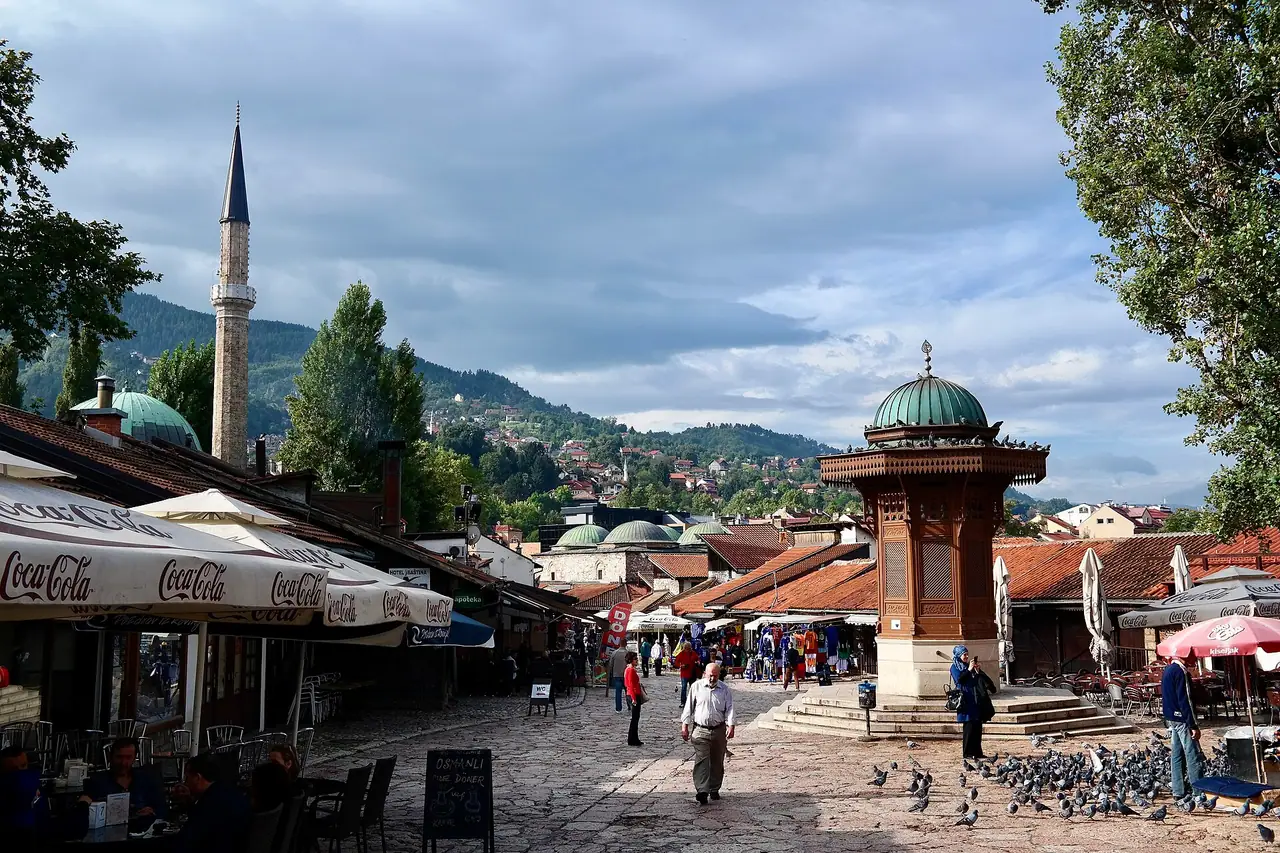


Family house Sevdah
€91a nightFree cancellationPay on arrival


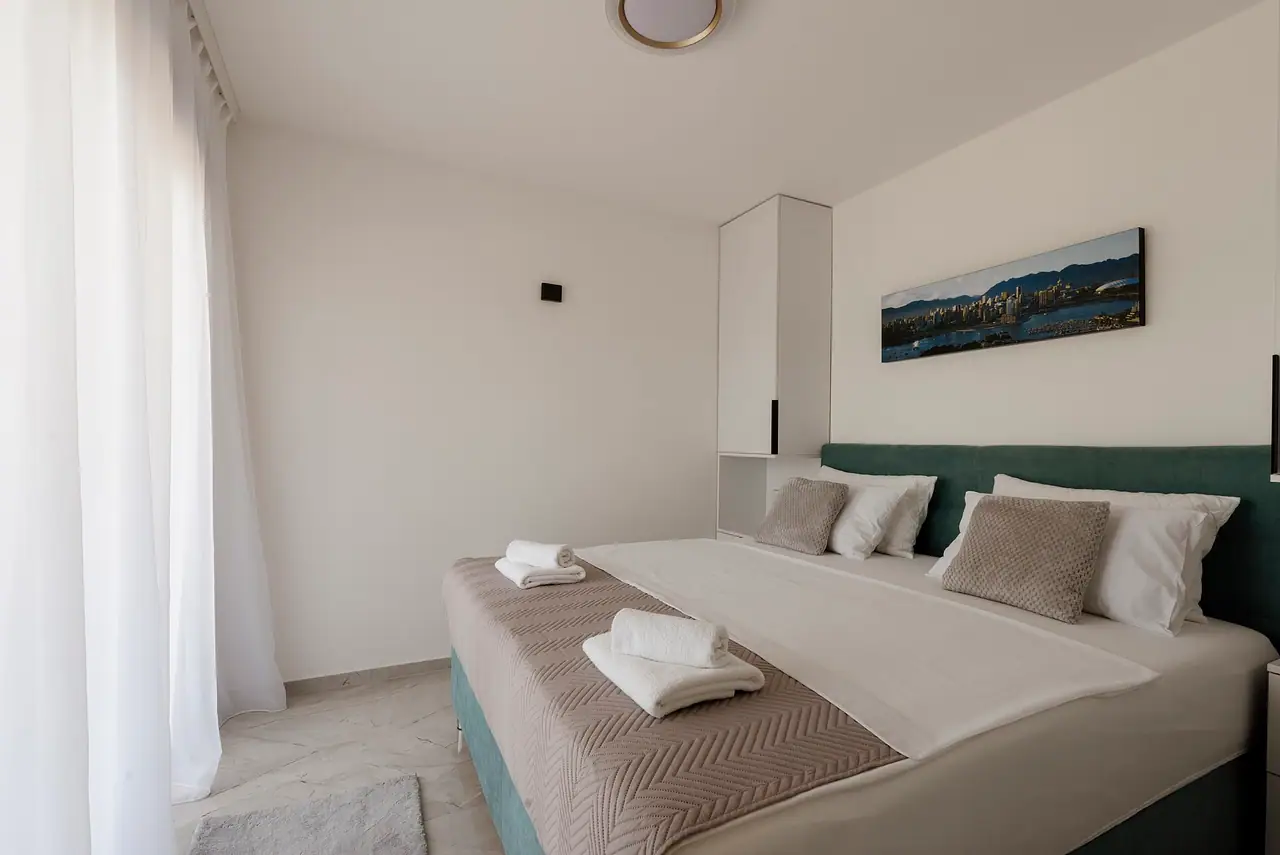
Bright apartment Mušebak, Baščaršija
€42a nightFree cancellation

Room in Dragan’s home, Marijin Dvor
€39a nightFree cancellationPay on arrival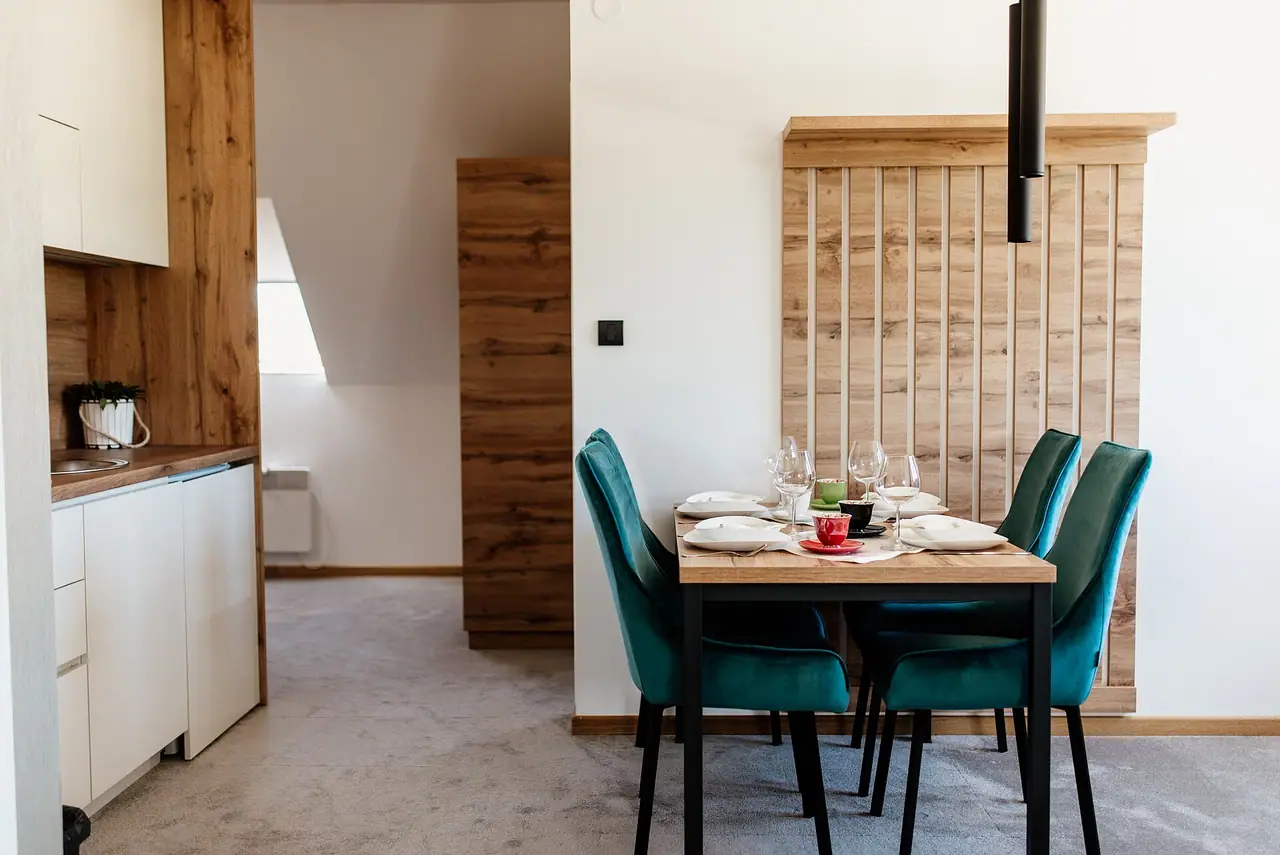
Guide
Tuzla: a guide to your stay
Where to stay in Tuzla, what to see, how to get there and when to go: the city of salt, where in summer you swim in the salty Pannonian Lakes in the middle of town.
Why Tuzla
Tuzla is a city in north-eastern Bosnia and Herzegovina, in the Federation of Bosnia and Herzegovina, and the seat of Tuzla Canton. It lies on the Jala river, below the mountain of Majevica. At the 2013 census the city had 110,979 inhabitants, and the University of Tuzla, with its thousands of students, gives it a young, lively pace.
The city’s name comes from the Turkish word for salt, and that is no accident. Beneath Tuzla lie deposits of salt and brine left behind by the Pannonian Sea, and salt has been produced here since the Neolithic. Today that salt water fills the Pannonian Lakes, so in summer you can swim in salt water in the middle of the city, far from the sea. For many people, Tuzla is also their first stop in the country: the airport, with its low-cost flights, is 14 km from the city.
Where to stay in Tuzla
In Tuzla, everything on Najmio is let by local hosts: flats by the night in the city, apartments for couples and families, houses with a garden and rooms in a family home. There are no hotel rooms and no middlemen. You deal directly with a host who lives nearby, and you pay when you arrive.
- The centre. The most sought-after stays are apartments in the centre of Tuzla, near Freedom Square, Salt Square and the museum. Cafés, the promenade and the lakes are a few minutes’ walk away, so you won’t need a car.
- By the Pannonian Lakes. Apartments near the lakes suit families who come in summer to swim: you walk to the beach, and in the evening you stroll through the park.
- The hills around the city. Houses and larger apartments on the slopes around Tuzla give you more space and quiet. You will need a car or a taxi.
The host sets the price, and you see all of it, cleaning included, before you book. If you are flying into Tuzla, a place to stay in the centre is a good choice: the airport is about 25 minutes’ drive from there. In summer, during the swimming season, and around public holidays, the best apartments fill up fast, so book ahead.
Things to see and do in Tuzla
The Pannonian Lakes
The Pannonian Lakes are three man-made lakes in the city centre, each a different size and depth. They are filled with mineral-rich salt water, drawn from the ground through salt wells. The first lake opened in 2003, and the second, with its salt waterfalls, and the third were added by 2012.
Around the lakes are pebble beaches, pools and water slides. The salt waterfalls are open-air cascades, and you can breathe in the salty air beside them. Next to the complex is an archaeological park with a reconstructed Neolithic pile-dwelling settlement, and the geological exhibition Pannonica, with 100 minerals and 120 fossils. Among them is tuzlaite, a mineral known only from Tuzla’s salt deposits. You can swim in summer, and the season usually starts in June; check the exact dates and opening hours before you come.
The Museum of Eastern Bosnia
The Museum of Eastern Bosnia is a regional museum founded in 1947. It follows this region from prehistory to the 20th century, through its archaeology, history, ethnology, art and natural history departments. Among its best-known pieces is a Roman relief of the god Mithras, and the ethnology rooms show carved furniture, brassware and kilims from old Bosnian houses. The exhibitions are spread over several buildings, so before you visit, ask where to find what you want to see, and check the opening hours.
Freedom Square and the old centre
According to the city tourist board, Freedom Square (Trg slobode), at around 8,000 m², is the largest square in Bosnia and Herzegovina. Remains of a Neolithic settlement were found here, and the fountain in the middle is shaped like the vessel in which salt was once boiled. Around the square are the 16th-century Čaršija Mosque, the Ruždija building from 1883, the Čaršija drinking fountain from 1888 and a Baroque building from the Austro-Hungarian period. On the north side is a sculpture modelled on a stećak, a medieval tombstone.
The centre also has the Atik Behram Bey Mosque, known as Šarena, the Colourful Mosque; the Turali Bey Mosque; and the Orthodox Cathedral of the Dormition of the Mother of God, from 1882. The Kapija memorial keeps alive the memory of the 71 people killed in the shelling of 25 May 1995.
Slana Banja and the City Park
Right next to the lakes is Slana Banja, a large city park with paths for walking and running, and sports grounds. In the park are monuments to the soldiers and victims of the Second World War and of the 1992–1995 war, and a memorial to the young people killed at Kapija. A footbridge leads to the City Park (Gradski park), with medieval stećci tombstones and a monument to King Tvrtko I.
Day trips from Tuzla
- Srebrenik: a medieval fortress on a steep, almost inaccessible rock in the village of Gornji Srebrenik, first mentioned in records in 1333 and a national monument since 2004.
- Banovići and Mount Konjuh: forests and the mountain rivers Oskova, Krabanja, Zlaća and Studešnica, for walks and fishing.
- Sarajevo, 118 km: for a full day, or as the next stop on your trip.
Tuzla, the city of salt
Salt has shaped the whole history of Tuzla. Finds show that salt water was boiled here as early as the Neolithic. In 950 the Byzantine emperor Constantine Porphyrogenitus mentions the town as Salines, and the name Tuzla appears from 1474. Under Austro-Hungarian rule, the first industrial saltworks opened in Simin Han in 1885, followed by the one in Kreka in 1891.
Decades of pumping brine in the 20th century made the ground in the centre subside, so few buildings older than the 20th century are left in the old part of the city. The wells that caused the subsidence were closed in 2007. In the same year, salt production in Tuzla was declared a national monument of Bosnia and Herzegovina.
- Salt Square (Solni trg) in the centre keeps an Ottoman salt well about 60 metres deep, which was used for around five centuries and is now under glass. Beside it is a display of Neolithic and Ottoman objects from the area and a reconstruction of salt boiling. The fountain on the square, a gift from the city of Ravenna, is shaped like a Neolithic salt-boiling vessel.
- The Salt Museum (Muzej solarstva) is in the old saltworks in Kreka, in a former salt warehouse. Its permanent exhibition, opened in 1985, follows salt production in Tuzla from prehistory to the present day. Before you visit, ask the city tourist board when it is open.
Getting to Tuzla
| From | Distance | Driving time |
|---|---|---|
| Tuzla Airport (TZL) | 14 km | about 25 min |
| Sarajevo | 118 km | about 2 h 30 min |
| Slavonski Brod, Croatia | 128 km | about 2 h 15 min |
| Banja Luka | 165 km | about 2 h 15 min |
These times assume no wait at the border. Tuzla Airport is in Dubrave, in the Živinice area. Low-cost airlines fly from here, mostly to Germany, and there are seasonal flights in summer too. The timetable changes, so check it before you travel.
Croatia is in the Schengen Area, so there are full checks at the border towards Slavonski Brod. Bring your passport and check the rules for your nationality before you travel.
When to go
Tuzla has a moderate continental climate, with warm summers and cold winters. In July, daytime highs average about 28 °C, and January averages about 0 °C.
- Summer (June to August): the swimming season at the Pannonian Lakes and the city’s summer programme, Ljeto u Tuzli (Summer in Tuzla). The lakes are busiest at weekends in August.
- Spring and autumn: pleasant weather for walks around the centre, the museums and day trips to Konjuh and Srebrenik.
- Winter: cold and quiet, for a short city break and the museums. The lakes are not open for swimming then.
Practical tips
- Paying for your stay: on Najmio, you pay your host when you arrive, with no booking fee.
- Money: the currency is the convertible mark (KM), and one euro is worth exactly 1.95583 KM. Cash comes in handy for small purchases. There is more in the story Paying your way in Bosnia and Herzegovina.
- Registration and tourist tax: your host registers you as a guest and charges the tourist tax per person per night, under local rules. Bring your ID card or passport.
- Getting around: Freedom Square, Salt Square, the museum and the lakes are easy to see on foot. For the airport, Srebrenik and Konjuh, you will need a car or a taxi. If you are coming by car, ask your host about parking before you arrive.
- Information: the Tuzla City Tourist Board has details of the swimming season at the lakes, the museums and events in the city.
Have a home in Tuzla?
List it on Najmio and host the people who come to Tuzla. There's no sign-up fee: hosts pay a flat 10%, and only after a completed stay.
Questions
About staying in Tuzla
Q.01Accommodation
Where is the best place to stay in Tuzla?
In the centre, near Freedom Square (Trg slobode) and the Pannonian Lakes, if you want everything a few minutes’ walk away. Houses and apartments in the hills around the city are quieter and suit you if you are coming by car.
Q.02Getting there
How far is Tuzla from Sarajevo?
About 118 km, or around 2 hours 30 minutes by car.
Related
Q.03Getting there
How far is Tuzla Airport from the city?
Tuzla Airport (TZL) is in Dubrave, 14 km or about 25 minutes by car from the centre. Low-cost airlines fly from here, and there are seasonal flights in summer too.
Related
Q.04Getting there
How far is Tuzla from Banja Luka and Slavonski Brod?
From Banja Luka it is 165 km, about 2 h 15 min by car. Slavonski Brod in Croatia is 128 km away, also about 2 h 15 min, with no wait at the border.
Related
Q.05Sightseeing
What is there to see in Tuzla?
The Pannonian Lakes, with salt water in the middle of the city; the Museum of Eastern Bosnia; Freedom Square; and Salt Square, with its Ottoman salt well. For a day trip, there are Srebrenik Fortress and Mount Konjuh.
Related
Q.06Sightseeing
Can you swim in salt water in Tuzla?
Yes. The Pannonian Lakes are three man-made lakes in the city centre, filled with salt water from underground salt wells. You can swim in summer; the season usually starts in June, but check the exact dates before you come.
Related
Q.07Sightseeing
When is the best time to visit Tuzla?
In summer, from June to August, if you are coming to swim in the lakes. Spring and autumn are pleasant for walks around the city and day trips, and winters are cold.
Related
Q.08Practical tips
How do I pay for my stay?
On Najmio, you pay your host when you arrive, with no booking fee. Bosnia and Herzegovina uses the convertible mark (KM), and one euro is worth exactly 1.95583 KM.
Something else? Write to info@najmio.com or call +387 66 111 909, and our customer support will answer as soon as possible.